
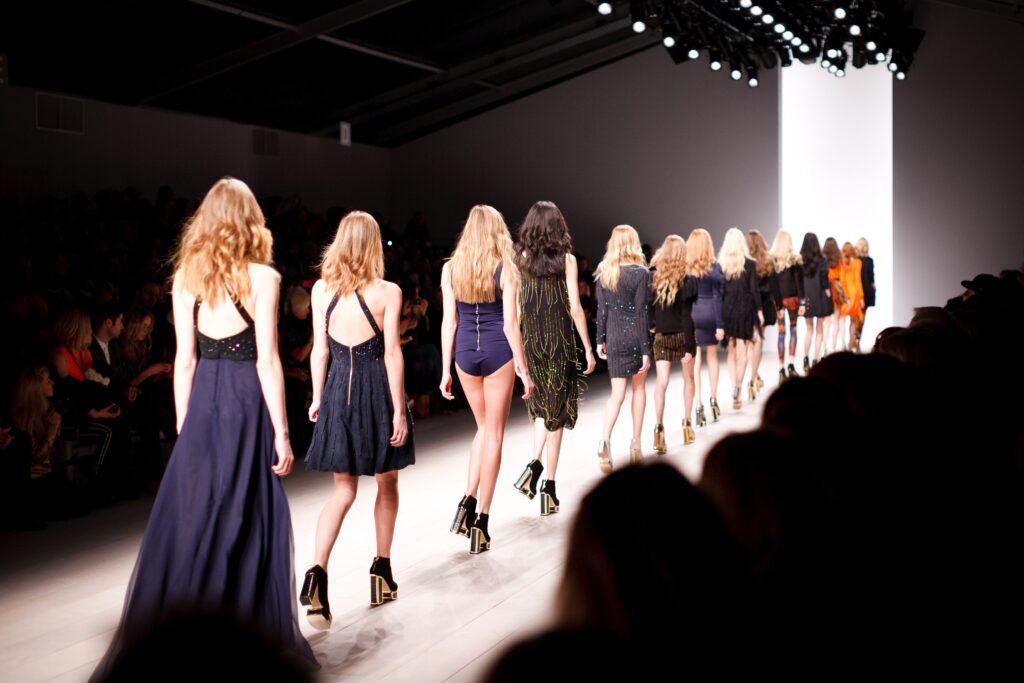
Annually at the end of February, British designers come together to celebrate the creativity, innovation and exceptional craftsmanship of the fashion industry through London Fashion Week. Hours of work by hundreds of individuals go into creating the spectacle of the show; but what is it like to work behind the scenes? We caught up with a model at London Fashion Week who told us what is was like behind closed doors before she walked the catwalk.
It was go, go, go backstage. I felt like I was in The Devil Wears Prada scurrying around in anticipation of Miranda Priestley’s arrival. The room was only small. The amount of people bouncing around makes it seem even smaller. Never having worked a fashion week before I was itching to get into the thick of it. After meeting the team, I was tasked with steaming and preparing garments, setting up the showroom, helping designers get models ready and assisting with any tasks that helped everything run smoothly.
Naturally the pressure of perfection loomed over the designers, they put their hearts and souls into all their pieces and wished their spotlight moment was the best possible. During the preparation I was lucky enough to speak to designers Bettie Jiang and Harrison Wong who kindly spent time explaining to me their designs – the thought process behind them, their sustainability and the best way to prepare and steam the garments. Interactions like these were so kind and really made me feel included rather than just an employee.
I came to realise just how much emphasis sustainability had on the outfits at London Fashion Week 2026. Just one example is Angus Tsuis, who places sustainability at the core of his designs. This year he incorporated vegan leather repurposed from delivery drivers’ uniforms into his pieces. Not only was this so important this year in Fashion Week but within the industry going forward; you could almost guarantee a launch won’t be as successful for a non-sustainable brand.
In the backstage rooms at 180 The Strand constant power cuts made readying the models more difficult. The sheer amount of electricity needed to power the show made this a frequent problem. After some stress, slight miscommunications and a last-minute panic regarding a timing issue (the models potentially not having time to change before re-entering the runway), we were ready to go, and it ran smoothly. Despite this, I wouldn’t have changed the high paced environment for the world. It was thrilling and made it all the more rewarding when everything ran smoothly. I hadn’t expected the atmosphere to be so upbeat. In my head I had this image of deadpan models and serious faces which couldn’t have been further from the truth. In reality Proud Mary by Tina Turner was blaring, the hairstylists were dancing while working and we drank tequila cocktails from the owner of my agency’s brand. I didn’t expect it to be so fun.
When it came to showtime the atmosphere was electric and extremely hectic but in the best way possible. The room radiated excitement, anticipation and all-around positive vibes. We finally had something to show for all our hard work and everyone was glowing with nervous excitement. It was an incredible experience. Seeing the inner workings of the industry and being able to see the work that went into the whole thing was thrilling. It was incredible to see how the amount of people involved can work together so perfectly and seamlessly to bring to life the visions of the designers.
After the show everyone let out a sigh of relief they hadn’t realised they were holding in all day. I felt so proud to be involved – it was like I was part of something bigger than my individual duties; hundreds of us all working towards creating the magic of London Fashion Week.
Leave a Reply