
People who click on this article fall into one of two categories: “What on God’s green earth is Lemon8?” and “tells all their friends, ‘it’s like if Instagram and Pinterest had a baby, you’d love it!’”
Under the unsuspecting noses of those who aren’t chronically online, ByteDance, the parent company of TikTok, released the social media app Lemon8. According to Business Insider, the app was launched in Japan in 2020, later expanding to Thailand, Indonesia, Malaysia, Vietnam, and Singapore. It has silently entered the UK and US markets, and Insider reports that some UK creators are even being paid to post on the platform. You can find viral creators like Jordan the Stallion on Lemon8 too, although they amass a fraction of the following. My first exposure to the app was through a small business, offering a £15 discount on their product if the customer made a post on Lemon8 and used a specific hashtag under it.
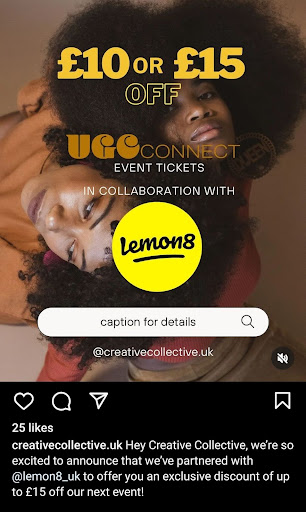
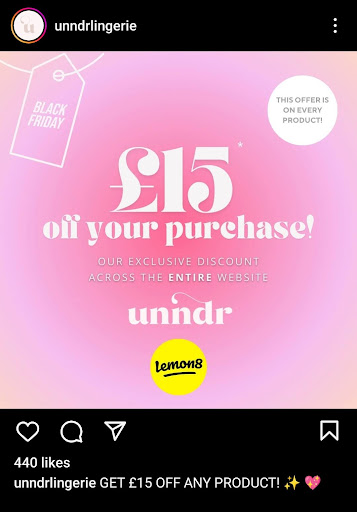
It’s no surprise that these strategic moves catapulted this strange new app to the top as it became the Number 1 most downloaded free lifestyle app in the Apple App Store by April 2023.
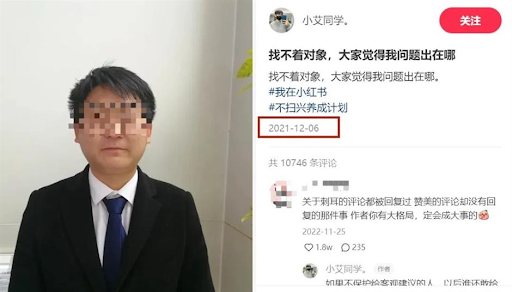
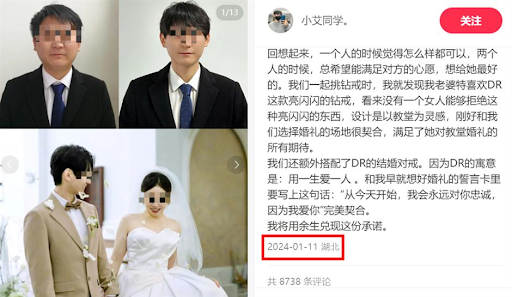
Lemon8 has been ByteDance’s very literal response to the Chinese app Xiaohongshu or Little Red Book in foreign markets. Xiaohongshu is most popular for “extreme makeovers” by amateur users, including the radical success story of user “小艾同学” who posted, “Can’t find a partner, where do you think the problem lies?”. According to Shine, users were quick to action, their advice ranging from “encouraging him to lose weight to bluntly pointing out his low income and poor conditions.” He changed his hairstyle, fitness, skincare and fashion routine, making a radical transformation to a “heartthrob.” He even posted pictures from his wedding on 11th January 2024, almost three years after his fateful post. Stories like this attracted foreigners from countries such as the US, Canada, Spain, India, Poland and more to hold up the Chinese phrase “听劝”, that is, “I’ll listen to your advice” and watch as elaborate skincare routines, fashion designs and more came to their rescue.
This trend has leaked onto Xiahongshu’s cousin Lemon8, where “What can I do to be prettier?” became one of its first trends. Young women, typically in their mid-teens or early twenties have taken to the app, expressing their deepest insecurities and asking users to “be very honest” or even “be brutal.” To understand this trend and the many surprising responses it brings, I decided to put my self-confidence on the line and try it myself.
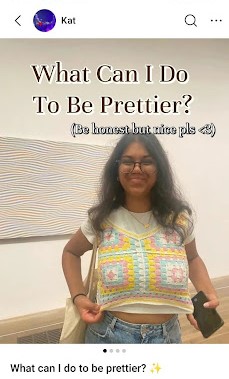
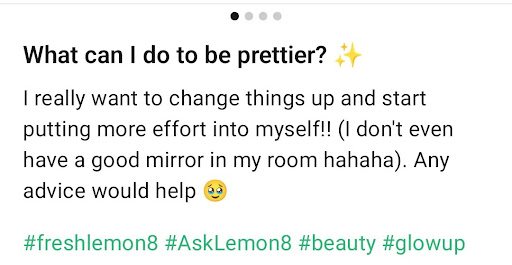
My first takeaway from this trend is that the advice seems to be kind and even constructive, almost as if it’s from a cool older sister. Most advice began with “You’re so naturally pretty,” “please love and accept yourself as you are…” or “you’re beautiful the way you are but if I’m being honest…”. Many commenters even came to simply leave a message of self-love, for example: “You’re perfect the way you are please don’t try anything about yourself for others validation.”
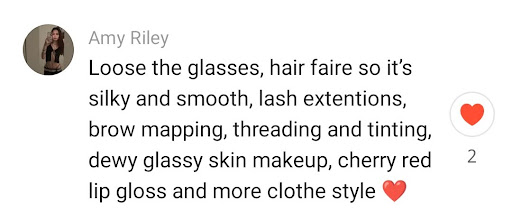
Secondly, most advice centred around “enhancing” one’s “natural beauty.” This is in line with recent trends, such as the “clean girl” and “glass skin” makeup looks or the “glazed donut skin” trend. It is focused heavily on skincare and haircare products along with lash lifts, brow tinting and mapping, threading, hair trimming type advice which fall under “low maintenance” beauty strategies that are thought to work for you, even when you don’t work at them constantly.
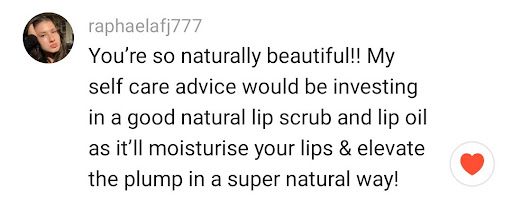
Third, Lemon8 seems to be more obsessed than usual with the “Cherry Red lipstick” trend. Inspired by autumn and Lana Del Rey, the lip look has gone viral. Users on Instagram and TikTok rave about Clinique, Revlon and ELF whose products are hailed as the best for this shade. There is also a focus on lip oils, which have been popularised by brands like Gisou and Fenty and nourish your lips, similar to a lip balm.
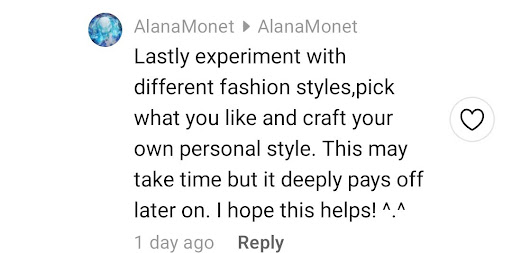
Fourth, while Lemon8 itself seems to focus on fashion more for indiscriminately driving affiliate sales links, a large amount of fashion advice centres around the notion of “finding your personal style”, the kind you feel most confident in and that acts as a signature of yourself, epitomising “you”, akin to finding your aesthetic on Pinterest.
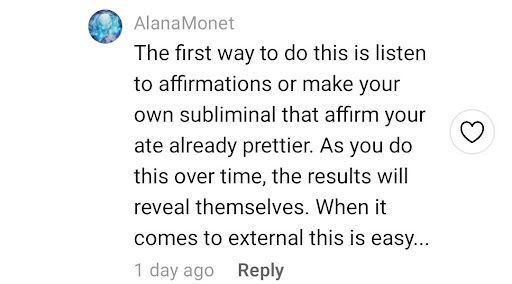
Finally, Lemon8 is a very small app with a deep friendly community feel. This encourages advice that I wouldn’t call particularly factual- the kind your friend would give you during recess or you’d try after watching one too many TheWizardLiz videos. This includes using affirmations and listening to self-confidence and beauty related subliminals which are meant to be coded frequencies that almost rewire your brain. I would like to note here that I relentlessly tried both affirmations and subliminals to get straight-As when I was seventeen (it did not work, by the way).
This attests to the fact that Lemon8’s audience, especially those who engage in trends like this are young and impressionable. While this trend appears to be harmless, a concern raised by many users on this app is that vulnerable people are being accidentally exposed to a large audience, leaving them susceptible to notions that can alter their self-image based on physical appearance.
Dr Louise Chambers, who is a lecturer and co-convenor of the MA Gender, Media and Culture degree at Goldsmiths University of London, also urges us to think about this: “Over the last 10 or 15 years, people are beginning to relate to you on an emotional level. There’s this ‘girlfriend culture’ where people pretend to be your best friend saying things like ‘I love you, I think you’re very beautiful but’ and there’s always a ‘but’… some influencers in China even say ‘listen to me, I’m your big sister’ in order to sell certain products. You’re in these sorts of relationships with people you’ve never met so it creates these emotional friendships across apps.”
But here’s the plot twist. Dr Louise says “I think that’s great, it’s a lot of fun! It’s like being at school and sharing beauty tips but it’s harmful when a corporation thinks they can make money off it, and it becomes commodified. ” This is why it’s concerning that Lemon8 has a strong consumerist undertone and is accused of being “the shameless aggregation of the e-commerce aspects of our popular social media platforms”. It is inundated with aesthetically pleasing fashion hauls and make-up, beauty and wellness recommendations, which are always accompanied with a price tag sticker, built into Lemon8’s collection of stickers (such as arrows, decorative stars “#1” or “#2”’s, etc). An employee at ByteDance told Reuters that “ByteDance is very determined to crack the ‘highbrow’ market (with Kesong and Lemon8) to achieve a higher ARPU,” (Average Revenue Per User). While every social media platform thrives on the revenue they make from advertising brands that are trending, this profit motive of Lemon8 encourages rampant overconsumption on their platform, which is fuelled by trends such as “What can I do to be prettier?” that create a need rather than a desire for products under the guise of self-improvement.
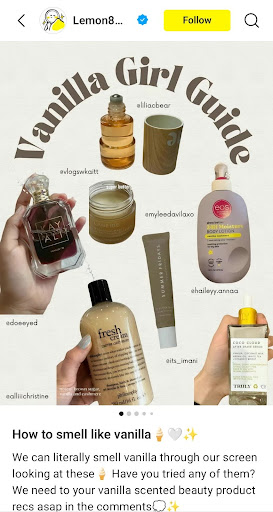
Another example of such a trend on Lemon8 is the “Vanilla Girl” trend, promoting perfumes, lotions and soaps that are a must have for any Vanilla Girl- a sweet girl who loves comfort or even just someone who wants to smell like cookies.
Another issue with this trend is a lack of conscience. Dr Louise says, “I think we need to think about what impact this has on our mental health. There’s a slow drip of criticism. By itself, say, working on your eyebrows seems really innocuous but it cumulates, maybe two or three times a day and over a period of time it starts to weigh you down. We come to these apps with a whole bunch of memories of how we’ve been treated before. When you put it in context of everything else you’ve been hearing about your entire life, it could be problematic.” So, let’s not forget, these people don’t actually know you.
In conclusion, Lemon8 is attracting a very unique young audience, who are bringing in their favourite parts of Pinterest and Instagram to create a vibrant, creative community. This communal sense can be a bait for vulnerable people to expose their innermost insecurities, but it has been a breath of fresh air of sisterly love (which should be taken with a grain of salt) from the unnecessary hate that even a video of a baby or a kitten can attract on Instagram reels and TikTok.