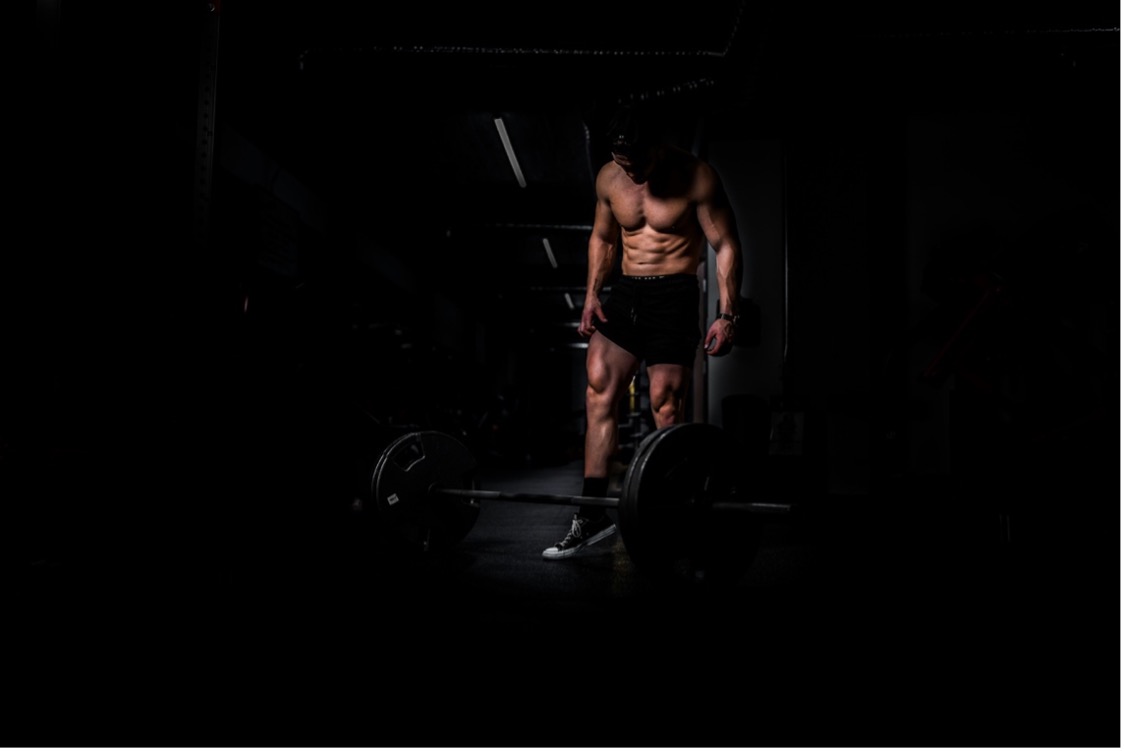
More and more men are falling victim to eating disorders such as muscle dysmorphia and bigorexia, Photograph: Anastase Maragos, Unsplash
Social media has intensified the pressure on men to conform to a particular body image, with the aspiration of building muscle and achieving a chiselled physique becoming more extreme than ever.
In the age of muscle-bound superheroes and Instagram influencers, platforms have created an ideal that many men feel they should strive for. This constant exposure to seemingly perfect bodies has contributed to an increasingly unrealistic standard for the “athletic” male form, fuelling the desire to meet these often-unattainable expectations.
The reality behind these gym transformations is often hidden beneath layers of steroids, mental health struggles, and a relentless drive for perfection.
Many individuals have turned the pursuit of the “ideal” body into an obsession that consumes them physically and emotionally. This constant drive often leads to extreme dieting, overexercising, and unhealthy weight loss methods, which take a serious toll on the body. Emotionally, it fosters feelings of inadequacy, anxiety, and self-criticism.
What’s more, this struggle is often hidden from view, as people conceal their physical and emotional battles, making it even harder to seek help or support.
Although gym culture demands are not new, they have escalated to previously unheard-of proportions. Self-described fitness experts produce a lot of content on social media sites like YouTube and Instagram.
For instance, Arnold, known as @ArnoldAesthetics on various social media platforms, has spent years perfecting his body.
He shares his workouts and meal plans via posts and stories, Arnold’s journey to achieve his muscular build is not without complications.
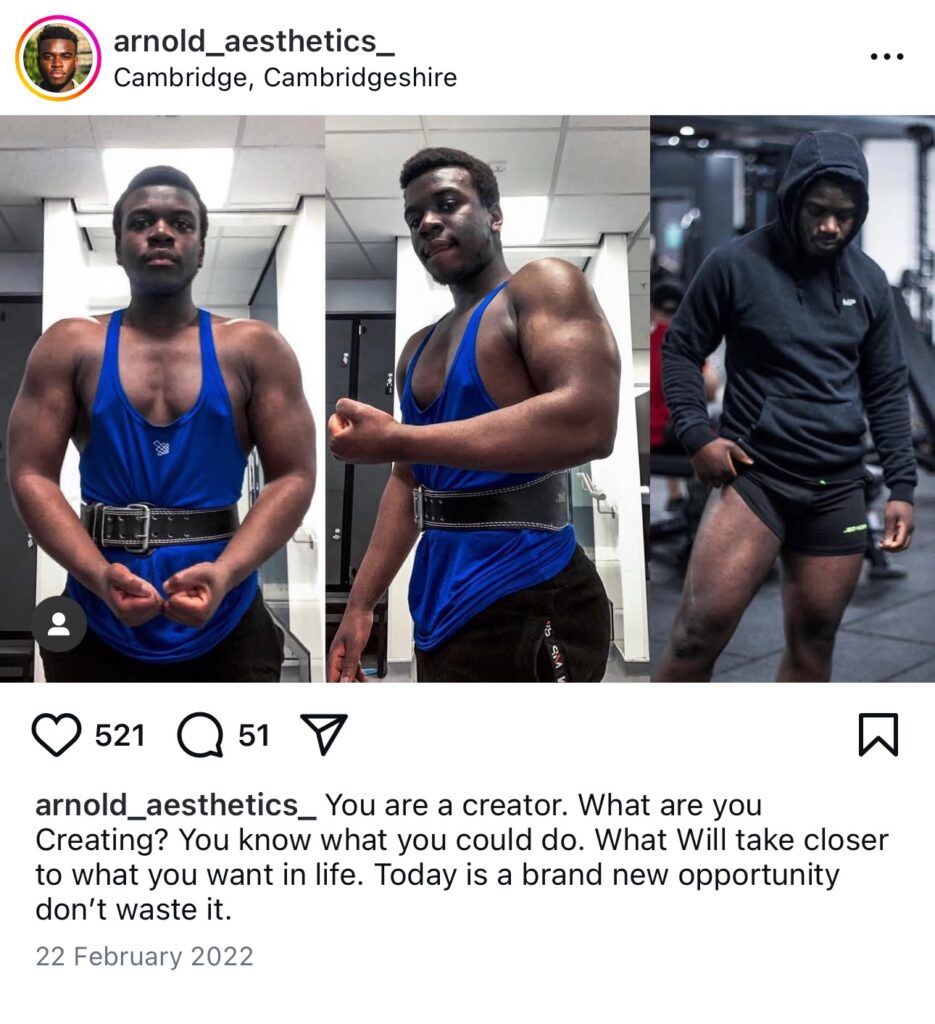
Photo: @Arnold_aesthetics_ via Instagram
Arnold states, “There’s this ongoing drive to look bigger, stronger, and more ripped than the next guy.”
Arnold’s Instagram account serves as a testament to the pressures placed on men to showcase their bodies in the best light. Every post, every image, is meticulously curated to display a body that is both strong and aesthetically pleasing traits that are rewarded in today’s social media ecosystem. But what happens when that quest for the perfect body becomes a never-ending race?
“The more I was validated by the comments and likes, the more it pushed me further into this need for a bigger body.” He explains.
Pressures on men, particularly online figures to present their bodies in the best possible light are demonstrated through Arnold as Every image and post are carefully chosen to showcase a figure which meets societal beauty standards as attractive and powerful.
He sees this comparison and self-criticism as a component of a greater psychological conflict. Arnold claims that despite his toned body, he frequently feels “too small” or “not enough.”
Regardless of their muscle mass, many men, like Arnold, suffer from a chronic feeling of dissatisfaction believing they are never lean or muscular enough.
This is defined as Muscle Dysmorphia, a type of body dysmorphic disorder that is frequently linked to eating disorders.
It is reported that over 10% of men who go to the gym suffer from muscle dysmorphia.
Often referred to as “bigorexia,” muscle dysmorphia is a disorder marked by an obsession with not being slender or muscular enough.
The condition primarily affects young males and has a big impact on their gym-related activities. Those who suffer from muscle dysmorphia frequently lift large weights, follow rigorous diets, and use performance-enhancing drugs like anabolic steroids to have the body they want.
According to a study published in the American Journal Of Psychiatry examining muscle dysmorphia within male weightlifters, participants with muscle dysmorphia, 50% (12 out of 24 participants) reported using anabolic steroids, compared to 13.3% (4 out of 30) in the control group.
A lot of young men’s everyday activities in gyms have been influenced by this pathological desire for muscularity.
Sam Woolford, who is currently studying a Bsc in Sports Science at Anglia Ruskin University in Cambridge shares his experiences with using drugs to enhance his physique.
Sam originally saw the gym as a place to increase his strength and well-being. He was lured to exercise to feel better about himself, as are many young men.
He worked closely with clients to help them reach their fitness objectives, becoming a personal trainer when he was just 20 years old. But as time went on, his attitude towards the gym started to change.
“You see influencers online who are shredded all year round, and it makes you think that’s normal.”
Despite his commitment to diet and exercise, he found it difficult to get the size and definition he saw online.
After years of training and trying to grow muscle, he then started to divulge into anabolic steroids.
He explains, “I heard from a couple of guys I knew at my gym who were using them how much of a difference it made and how big their physiques got almost overnight.”
In the beginning, the results were exactly what he had hoped for as his strength surged, muscle mass quickly expanded, and he got more compliments than ever before. However, the drawbacks soon became evident.
“My body just started falling apart, my heart would start beating extremely fast and I couldn’t control my temper”.
The use of performance-enhancing drugs (PEDs) has been prevalent for decades, long before the rise of social media and influencers. However, their popularity has surged again in recent years, largely due to the influence of social media platforms.
As fitness culture has become a central focus of Instagram, TikTok, and other social media sites, the pressure to conform to the “perfect” body image has intensified. With influencers and celebrities showcasing their muscular physiques, the pursuit of an unattainable ideal has fuelled a desire for quick and extreme results. The instant gratification offered by PEDs, along with the constant validation seen through likes, comments, and followers, has made them even more appealing to those looking to gain an edge in the race for perfection.
Social media, in many ways, has normalised these shortcuts, making PED use more accessible and desirable than ever before.
“I had customers with severe health issues including acne and high blood pressure”.
Samera Malik, a herbalist who previously worked at health and wellness retailers like GNC and managed stores at Holland & Barrett in the 2000s, has witnessed the fallout of steroid use first-hand.
Many of her customers, including bodybuilding competitors and athletes, sought her advice on steroid usage, often asking about the side effects and what could be done to reverse them.
“Steroids might provide fast results, but they take a serious toll on the body,” she says. “I’ve had customers come into the store suffering from severe acne, hormonal imbalances, and even heart palpitations—many of whom had been using steroids without fully understanding the long-term consequences.”
Malik explains that prolonged steroid use can lead to liver damage, high blood pressure, and a higher risk of mental health conditions such as anxiety and depression. She frequently served young men looking for supplements to manage these side effects.
“I had customers searching for liver detox supplements, testosterone boosters, and anxiety relief,” she says. “But what they needed was to stop using steroids in the first place.”
Despite growing awareness of the dangers of steroid use, the pressure to attain a certain physique remains deeply embedded in fitness culture.
As the industry continues to glorify unrealistic body standards, young men are left navigating a landscape where shortcuts seem more appealing than slow, natural progress.
“The fitness industry needs to do more to promote realistic goals,” says Sam. “It’s not just about looking good, it’s about feeling good, too.”