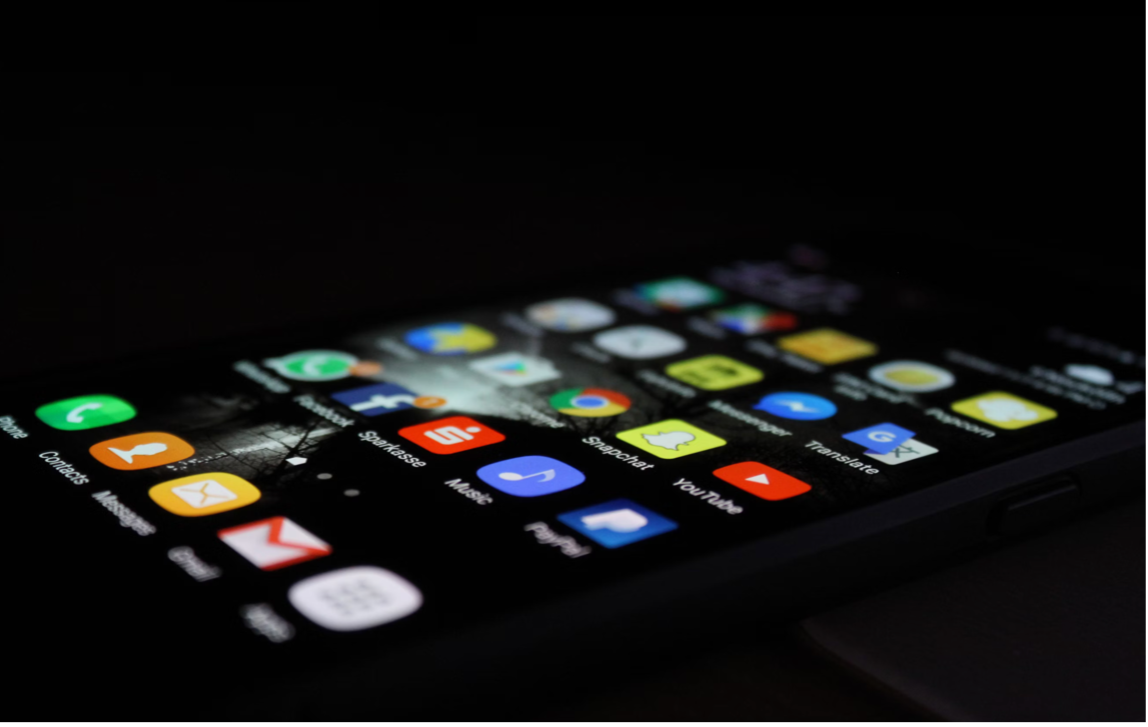
Created to facilitate communication and information, social media platforms have transformed into venues for the uncensored broadcasting of violent and horrific occurrences. Photograph: Rami Al-Zayat, Unsplash
You’re browsing Instagram amidst a ton of memes and news updates, and an unvarnished, unfiltered, and completely inevitable video of terrible violence emerges.
Before continuing, your thumb pauses, maybe for a moment. The important question is whether we have grown emotionally desensitised in a society where horrifying content is just another piece of media in an infinite stream.
Various platforms including Instagram and X (formally known as Twitter), have made it easier to obtain startling and graphic content, in contrast to traditional news media, which adheres to ethical editorial standards.
In February 2025 Meta, the parent company of Instagram, Facebook and WhatsApp faced widespread criticism for a flood of violent content overwhelming Instagram’s algorithm.
Users reported via a forum seeing harrowing footage of war zones, crime scenes, and dead bodies in their feeds, forcing the company to issue a public apology.
This follows controversial changes in Meta’s content moderation policies, where posts that were traditionally fact-checked are now subjected to “community notes,” allowing users to determine whether the content is deemed graphic.
A report states that less than 1% of content posted with themes of suicide meta took action came from users via community notes.
This dramatically reduces censorship and safeguarding on Meta’s respective platforms, underscoring an uncomfortable truth: social media platforms are failing to protect users from psychological harm.
Second-year sociology student at Kings College, Sara Khan remembers the first time she saw a very violent video on her timeline.
“I was just scrolling through TikTok, and suddenly a bombing footage caught my attention, what I was going to witness had no warning and no way to be ready for it,” she recalls.
Khan states, “Despite being appalled, I continued to scroll.”
For Sara, the normalisation of such content has created a disturbing paradox. “I don’t think we, as a generation, are choosing to be indifferent. But when you see this level of horror so often, your brain adapts. It’s like a defence mechanism.”
Empirical studies support the psychological effects of recurrent exposure to violent media, raising serious issues with empathy loss and emotional desensitisation.
A study by the National Library Of Medicine, Testing functional magnetic resonance imaging (fMRI) revealed that short-term exposure to violent media led to diminished activation in the right lateral orbitofrontal cortex (ltOFC), a brain region associated with behaviour regulation.
This attenuation was not observed with equally arousing but non-violent media. Notably, individuals exhibiting reduced ltOFC responses also reported higher tendencies toward reactive aggression. This suggests that even brief exposure to violent content can impair neural mechanisms responsible for controlling aggressive behaviours.
The study further illustrated how repeated exposure to media violence can lead to short-term desensitisation, characterised by decreased sympathy for victims and increased enjoyment of violent content.
Participants who watched nine violent movie scenes reported progressively lower sympathy for victims and greater enjoyment as exposure continued. This pattern was not observed with non-violent, comedic scenes, underscoring a specific desensitisation effect linked to violent media.
Ella Fernandez, a nursing student at Anglia Ruskin University, (ARU), has seen this play out in healthcare settings.
“When you work in a hospital, you see first-hand the real-life consequences of violence, gunshot wounds, domestic abuse injuries, trauma victims.
“People start to see victims as something distant, rather than human beings who need help,” She explains.
The question of responsibility inevitably falls on social media companies, who often prioritise engagement over ethics.
Despite implementing content warnings and reporting mechanisms, these platforms rely on algorithms that reward shocking and sensational material.
A 2023 study published in Nature Human Behaviour by Amit Goldenberg and Robb Willer found that emotionally charged content, including morally extreme and outrage-inducing posts, tends to receive significantly higher engagement on social media.
“If films with extreme violence have age restrictions, why can a 14-year-old scroll through footage of real-life executions without any barriers?” asks Ella.
“The difference is that one is fictional, and the other is real and yet, we regulate the former more strictly than the latter.”
Widespread desensitisation’s wider effects on society are arguably its most worrisome feature.
Sara, reflecting on her own experiences, adds, “I see footage of wars, police brutality, mass shootings—things that should make me feel something.”
She adds “I just feel tired. And I hate that I’m desensitised to human suffering”.
In a digital world where violent content circulates freely, the burden of protection often falls on individuals. Experts advise practical steps to limit exposure: muting triggering words on platforms like Twitter, disabling auto play to avoid distressing videos, and taking regular breaks to preserve emotional well-being.
But individual responsibility can only go so far. Schools must equip young people with the tools to navigate online spaces without becoming desensitised.
“We talk about mental health and anxiety, but not the trauma social media inflicts,” says Sara. “That needs to change.”