

Moving to a new country for university is often seen as an exciting opportunity, one filled with adventure, personal growth, and academic achievement. However, for many international students, this transition comes with significant mental health challenges that are rarely discussed. From cultural adjustment and academic pressure to loneliness and financial stress, the mental toll of studying abroad can be overwhelming.
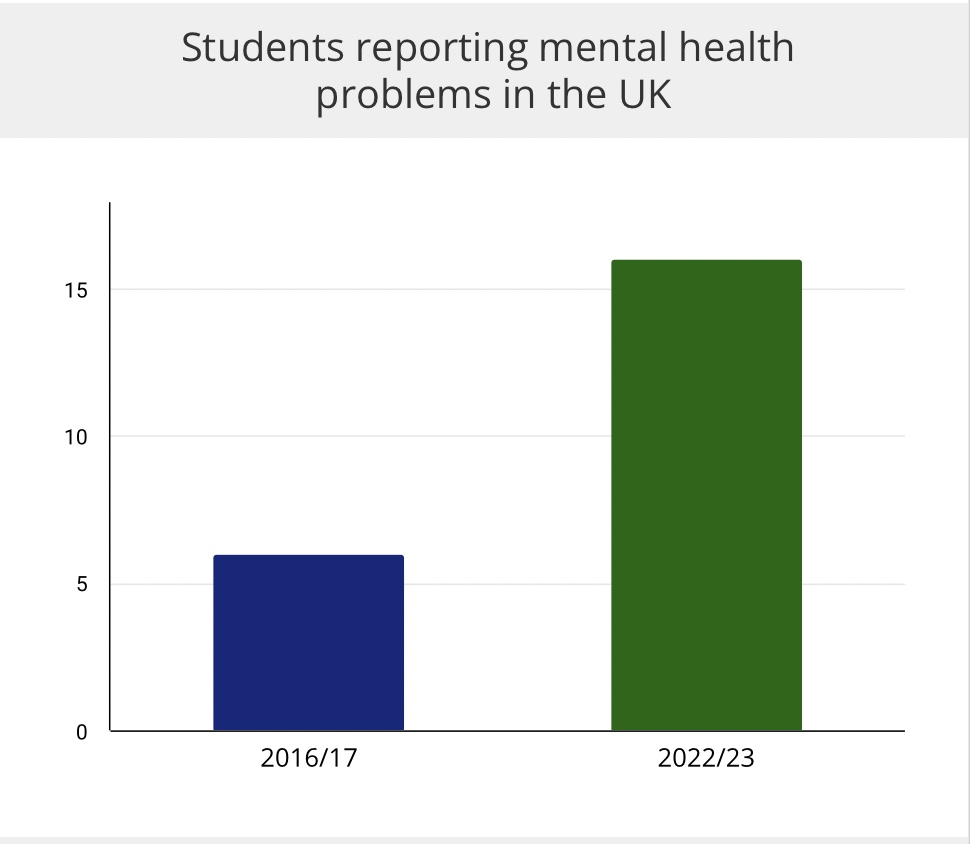
Recent studies from King’s College London have illuminated the gravity of the situation. Between the 2016/17 and 2022/23 academic years, the proportion of undergraduate students at UK universities reporting mental health difficulties rose from 6% to 16%, indicating that approximately one in six students now face such challenges.
The Pie News reported that 36% of international students have reported experiencing poor mental health during their studies in the UK.
Personal Stories
“At first, I was excited to be in a new country, but after a while, I started feeling isolated,” said Joanna, a Saudi Arabian student at Goldsmiths University. She stated that, despite being surrounded by people, she felt as though she had no one with whom she could converse.
Ramsha, who studies at the University of Leeds, experienced a cultural shock after relocating from Dubai. “The biggest thing that hit me was how early everything closes here,” she said. Dubai is usually bustling and everything is open late. I felt lonely since it seemed like the day was ending too soon here. She also struggled with the widespread drinking culture: “It was a little hard to get used to how much of student life revolves around drinking here coming from a Muslim country where alcohol isn’t a big part of social life.”
For Yezi, a student at Goldsmiths University who is from China, the pressure came from the difference in academic expectations. “Back home, studying was structured and clear. Here, everything is independent, and that was hard to adjust to. I felt like I was constantly falling behind, and that affected my confidence.”
Academic and Financial Pressures
There were further difficulties because of the academic setting. “Back home, studying was structured and clear,” said Yezi. It was challenging to get used to everything being independent here. My confidence was impacted since I felt like I was always lagging. Managing finances in a foreign country was also a major source of stress for her. “Everything is expensive, and the cost of living is much higher than I expected. I’m always worried about budgeting and making sure I don’t overspend.”
Lauren, the chief impact and Strategy Officer at the Brilliant Club and part of the Joint Dots program which is particularly targeted at supporting students to transition to university in that first year of study, shared a similar concern. “Tuition fees for international students are already high, and when you add rent, food, and travel, it becomes overwhelming.”
A Save the Student survey found that international students in the UK spend an average of £1,324 per month on living costs, significantly higher than domestic students.
Stress levels were further raised by financial worries. According to a recent survey by Oxford CBT, 70% of students said that their mental health suffered because of financial concerns.
A lecturer in the psychology department at Goldsmiths, University of London, Dr Teemu Toivainen warns that prolonged stress without proper coping mechanisms can lead to burnout. “Many students push themselves to the limit without recognising the warning signs of burnout like chronic fatigue, lack of motivation, and anxiety. Universities should be more proactive in addressing this by offering workshops on stress management and academic planning”
Loneliness and Isolation
One of the most significant challenges for international students is loneliness. Moving away from family and familiar surroundings can be emotionally draining, and building a support system in a foreign country isn’t always easy.
Yezi spoke about how difficult it was to form close friendships. “People were friendly, but they already had their own groups. I felt like an outsider most of the time.”

Joanna had a similar experience. “The cultural and language barrier made things harder. Even though I speak English, I sometimes felt like I wasn’t fully understood, and that stopped me from socialising as much.”
In contrast, Ramsha was fortunate to have a few friends from Dubai who also moved to the UK. “Having familiar faces around really helped. It made me feel less alone and more confident in making new friends.”
In 2022, a report by Student Minds highlighted that 48% of students were concerned about making friends during the Autumn term.
A survey published in 2021 by the UK government revealed that 52% of students identified loneliness as a significant concern, surpassing issues like financial management (49%) and academic challenges (49%).
Toivainen emphasises that social integration plays a crucial role in preventing mental health deterioration. “Humans thrive on connection, and when international students struggle to build a support network, their mental well-being suffers. Universities need to create more structured opportunities for international and domestic students to interact beyond just academic settings”
University Support Systems
Support for mental health at universities varies in quality between institutions. “I know there are mental health services available, but the waiting times are too long,” said Joanna. You already know how to handle it on your own by the time you receive an appointment.
Ramsha, on the other hand, who is a student at the University of Leeds had a better experience: “Mental health is a highly important topic at my university. We have disability support, counsellors, and even a simple method to ask for extensions if we’re having trouble.”
International students suffer difficulties, as noted by Toivainen : ”The psychological toll of adapting to a new country often goes unrecognised. Many students suffer from imposter syndrome, which makes them feel as though they don’t fit in either socially or academically. These emotions can raise the risk of burnout when paired with outside demands.”
Additionally, he underlined the necessity of culturally relevant mental health services, saying: “Mental health assistance is offered by many universities, but it’s frequently created with domestic students in mind. International students come from a variety of backgrounds, and the stigma associated with asking for assistance may keep them from doing so.
Coping Mechanisms and Advice for Future Students
Despite these struggles, international students have found ways to navigate their mental health challenges.
Ramsha emphasises the importance of balance. “Don’t focus only on academics. Find something you enjoy—whether it’s baking, reading, or just taking time for yourself. It makes a huge difference.”
Toivainen advises students to prioritise self-care and seek help when needed. “It’s important to recognise that struggling is normal, and seeking support isn’t a weakness. Universities and students must work together to build a more supportive environment”.
It is alarming that mental health problems are becoming more common among students. As stated by The Guardian, more than 63,000 young individuals switched from studying to receiving illness benefits in 2023, more than twice the number before the outbreak.
Universities, families and students themselves must work together to address these issues. A more welcoming and encouraging environment for all students can be achieved by proactive steps, culturally aware support networks, and open conversations regarding mental health.