Having a child is often described as a ‘miracle.’ Antinatalists see it as a moral mistake. Maslow speaks to those joining this growing, controversial movement
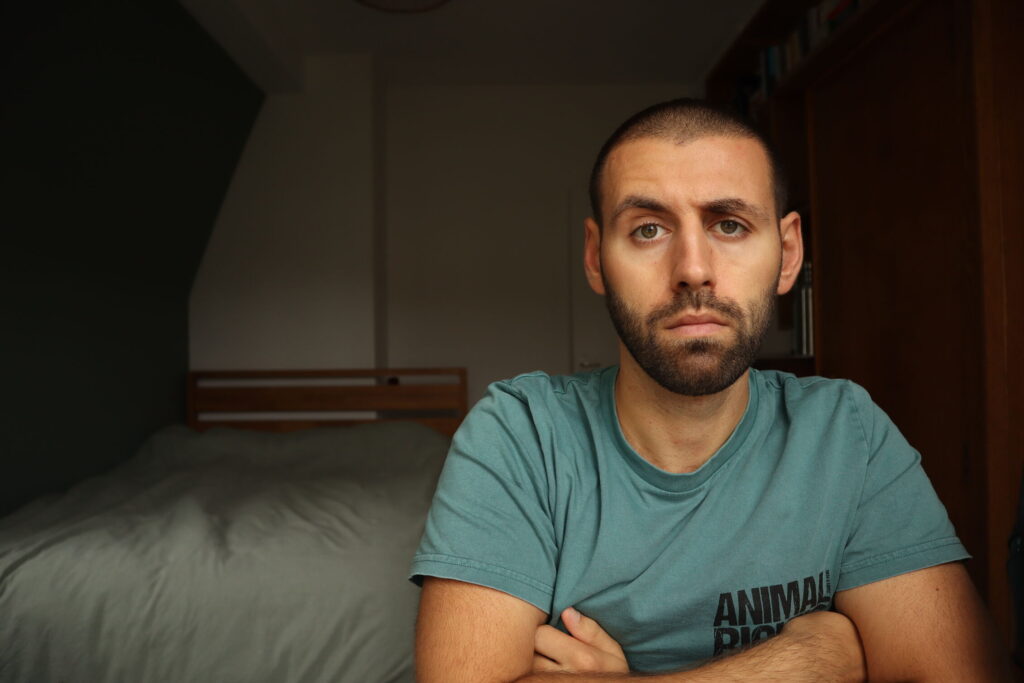
What if the kindest thing you could do for future generations was to never bring them into existence? For 27-year-old Lawrence Anton, that belief is so strong that he chose to have a vasectomy at 23 – a decision rooted in his conviction that life inevitably means suffering. “Once we exist, we can have dementia, cancer, we get bereaved, we get lonely, depressed, and go through so much,” he says. “It’s better to not create someone so that they’re not vulnerable to any of it.”
Antinatalism, the philosophy that argues procreation is morally wrong, has roots that go back to 19th century philosophers like Arthur Schopenhauer. Today, it has found a home online with communities on Facebook and Reddit, where hundreds of thousands discuss its ethical questions and share stories.
Lawrence documents his own journey on YouTube, posting educational videos for over 6,000 subscribers. In one video, he recalls his vasectomy. “I was nervously laughing through the whole thing,” he says. “It was nothing unbearable, but when they first injected me, it was sharper than I thought it would be. The surgeon actually showed me the part he took out, which I wish he hadn’t.” Lawrence’s surgery was covered by the NHS, through a separate body called the British Pregnancy Advisory Service.
Although his family “thought it was stupid”, Lawrence says he does not regret it. “It’s just a more responsible thing to do, to bear the risk yourself and go through that process, rather than allow the risk of perpetuating suffering,” he says. “I think it was one of the best decisions I’ve ever made.”
Lawrence’s decision mirrors that of others who have taken permanent steps to avoid procreation. Across the pond in Canada, antinatalist Julia Walsh* chose to remove her fallopian tubes when she was 34. “The surgery was simple – the recovery was the worst part,” she says. “I was extremely nauseous and sick,” she says. “For three days my whole core area was really sore. It hurt to do anything. Thankfully it only took 10 days to feel normal again.”
Although the surgery had no complications, getting it approved was not. Julia was rejected three times by doctors, as they thought she would change her mind. “If you don’t have children and you’re unmarried, they won’t consider you – we’re just baby machines to them,” she says. “But I always knew I didn’t want children. The more I looked at the suffering around the world, the more I realised antinatalism was the way to go.”
“I would never want to bring a child into this place and leave them to deal with the consequences.”
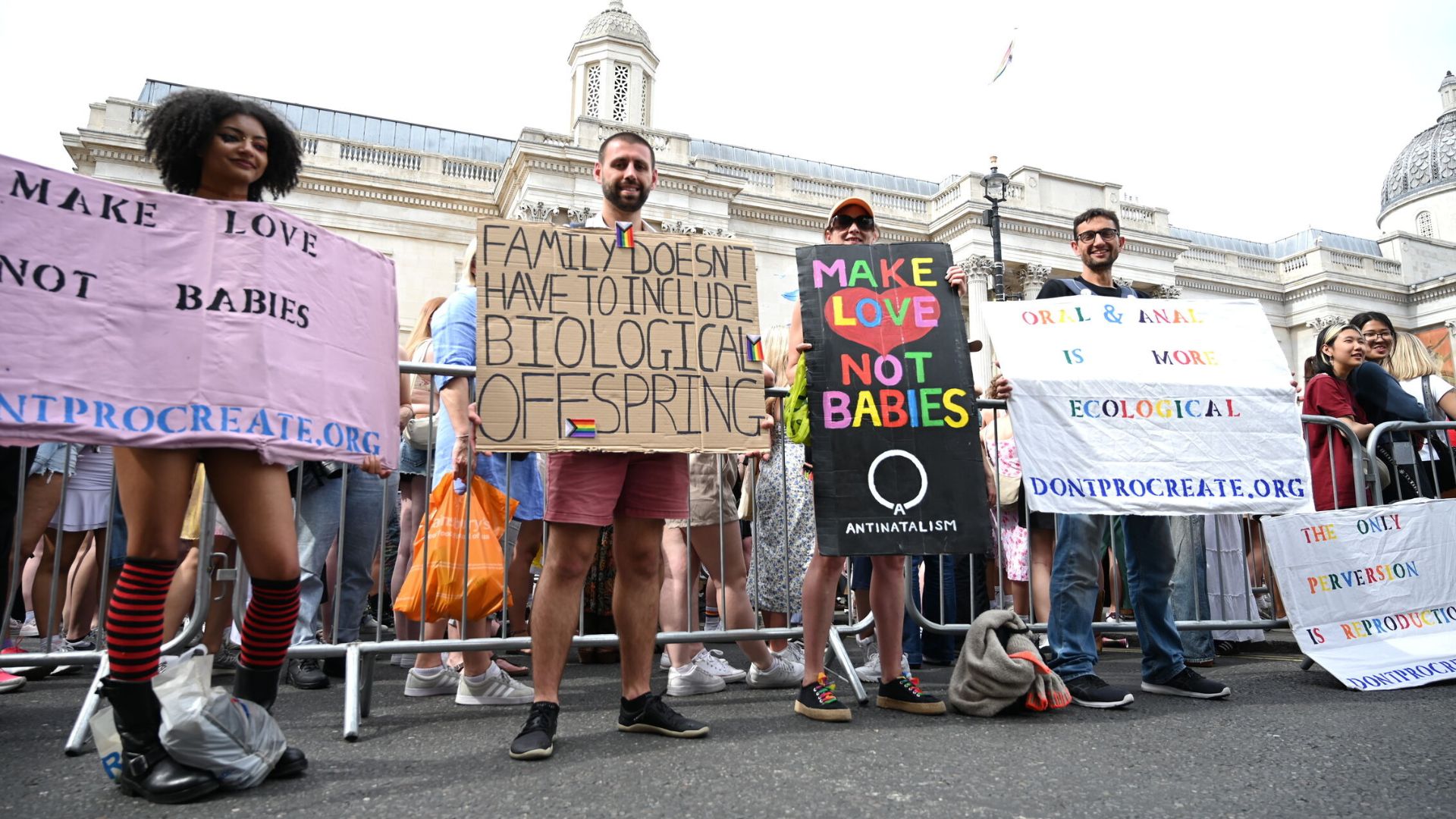
Like Julia, Lawrence has faced resistance to his beliefs – not from doctors, but the public. Often campaigning with placards at Speaker’s Corner and Camden High Street, he says many people he talks to either don’t understand it or think it’s bizarre. “There are lots of misconceptions. People tell me I’m an idiot and ask me why I haven’t killed myself,” he says. “It’s about the ethics of procreation, not an advocation of suicide.”
He says many also come away feeling validated for beliefs they’d never said aloud. “A lot of people come up to me and say, ‘I’ve always thought this, but never knew there was a word for it’,” he says. “Most people actually step away from our conversation saying, “I don’t fully agree with you, but I get where you’re coming from.’”
Jannah Santana, 31, is one of these people. Although she doesn’t describe herself as an antinatalist, she can relate to their views. “The world is fucked: hunger, poverty, everything going on in Palestine, bloody genital mutilation in certain countries,” she says. “I would never want to bring a child into this place and leave them to deal with the consequences.”
Many others are also questioning their desire to conceive children, as birth rates continue to fall. Birth rates in England have already dropped to a record low, and a recent YouGov report found almost 30 per cent of 18-40-year-olds currently without children say they definitely do not want them in the future. While financial pressures topped the list of reasons why, the second most common reason for this was the state of the world. And with global crises mounting, that number may well rise.
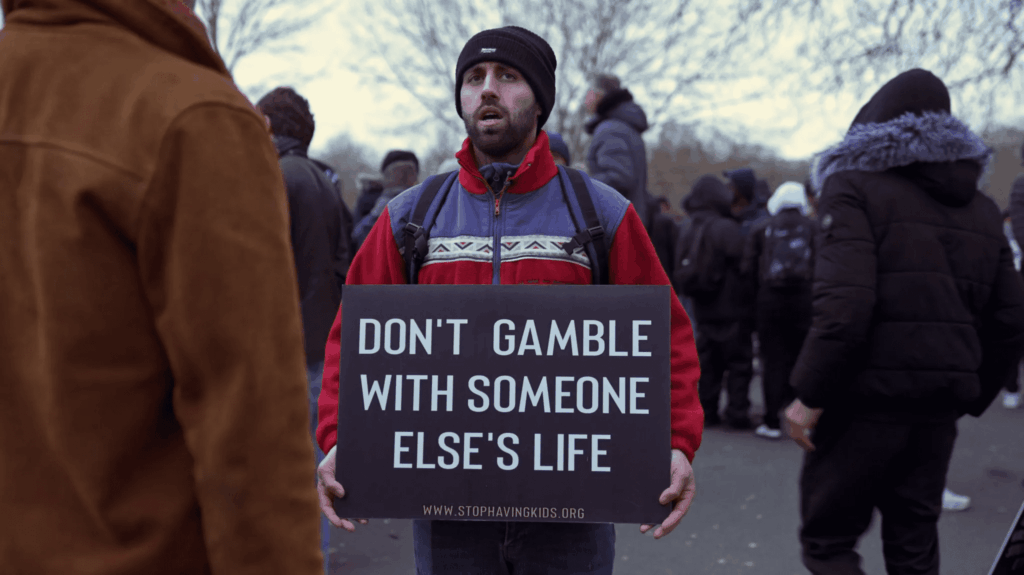
Lawrence’s own journey down the antinatalism rabbit hole began during a period of deep self-reflection, sparked by his decision to become vegan. It was during this time, he says, that he realised how easily his beliefs could be wrong – and how important it is to stay open to different ideas. For Dario Mirić, 28, the shift came through Buddhism, as he says, there’s a lot of overlap between the two philosophies. “If we want to reduce suffering, and we know existence brings unavoidable suffering, we shouldn’t procreate,” he says.
But these ideas don’t exist in isolation: Dario is in a relationship with someone who wants children. We’ve talked a lot about our differences. We’re still young so any of our beliefs can change – I also wanted kids when I was younger.” Outside of close relationships, Dario tends to keep his beliefs to himself. “I don’t really tell people I’m an antinatalist. With labels people attach a lot of stereotypes and maybe think I’m some crazy vegan or that I’m some super depressed person.”
The movement has recently found itself dragged into headlines for the wrong reasons: the bombing of a Florida IVF clinic, carried out by 25-year-old Edward Bartkus, has fuelled criticism that this fringe philosophy can become dangerous. In a manifesto on his now-deleted website, Bartkus said he planned to attack an IVF clinic because he didn’t consent to exist. He described himself as a pro-mortalist, a more radical offshoot of antinatalism that argues that it is better for existing beings to die. Bartkus died at the scene and four others were injured.
His website also mentioned the subreddit r/efilism, which had 12,000 members before it was banned after the bombing. A play on the word “life” spelt backwards, the term was coined by a YouTuber known as Inmendham to emphasise that all suffering of life, not just human, is “the greatest problem in the universe”. Some users migrated to the r/antinatalism subreddit, while one user created r/efilism2.

This case has raised wider concerns about how fringe philosophies spread online, and how isolated people can fall into extremist interpretations of otherwise non-violent ideologies. Jack Jiang, anthropologist and PhD researcher at the New School for Social Research says that digital spaces have played a major role in amplifying the movement. “By nature, online communities get into feedback loops, so niche philosophical movements grow out of that condition. There can be something conspiratorial about it sometimes,” he says.
Many in the community emphasise the distinction needed between each philosophy, as not to push misconceptions. “Antinatalism does not encourage extremists. Just like being pro-choice or anti-communist, someone could adopt [any view] and rationalise it in their head to enact violence, even if none condone it,” says Lawrence. “If someone bombs a fertility clinic, they’re very likely mentally unwell.”
Dario stresses that while some individuals within the community can express negativity or happen to take it to the extreme, this does not undermine the movement’s fundamental message – to prevent suffering and pain. “We don’t want to gamble with lives of others by creating them. Kindness and compassion are at the heart of antinatalism.”
*Name has been changed to protect anonymity