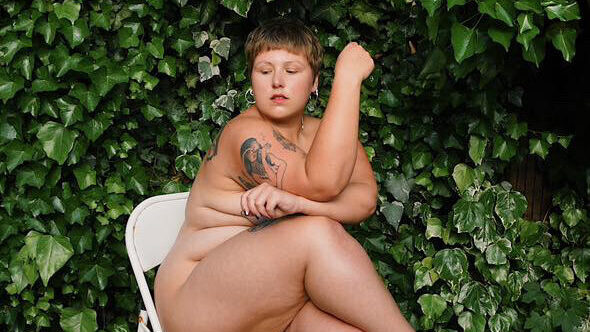
When the life model didn’t show up, Luce Howard, 25 stepped out behind the screen – and into a quiet fight for visibility
The room was still, broken only by the soft scrape of chairs as 20 students settled around the circle, a wooden box at its centre waiting to be filled by a body. It was my first time leading a life drawing session, and I was anxious – it was rare that models didn’t show up, but the one the studio had booked was nowhere to be seen. With five minutes before the class was due to start, I realised I would have to step in. I undressed behind a hand-painted folding screen in the corner of the room, dropping my clothes onto the floor. I had never posed nude before, so I wasn’t prepared. No robe, no warm-up, just a sharp breath as I stepped out behind the screen and arranged my naked body on the wooden box, 20 pairs of eyes waiting to translate me onto the page.
Once naked, I found it to be not as terrifying as I’d imagined. It was really quite comfortable and peaceful. Two hours to simply sit with yourself; it’s an incredibly meditative practice. You can’t change your line of sight or even shift your weight. It’s a way to tune into myself and ground myself. I practice breathwork best I can, especially when a pose is particularly long or challenging. I will get cramps or muscle spasms, and I find I need to breathe through the pain or refocus my energy to parts of my body that don’t hurt. There’s also an adrenaline crash my body goes through after, which can be exhausting at times. But it is still so rewarding. I have found a sort of bizarre satisfaction in breathing through the pain and repeating it to prove to myself that my body can push through these states.
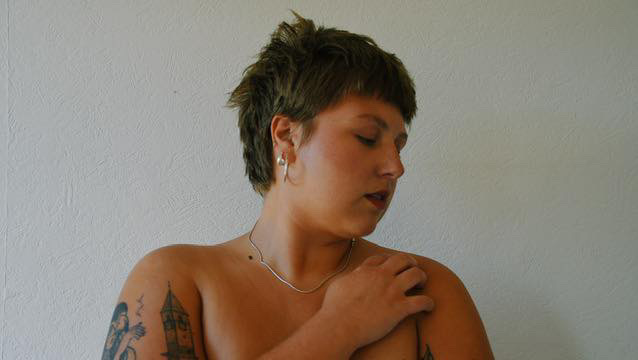
It had been the act of undressing itself however, that me feel vulnerable. There was something about the liminal state of undress that is provocative, which is perhaps why people think lingerie is exciting. Having to transition between the screen and a room full of strangers felt quite exposing. Even now, three years on from this very first time, I always let out a slight gasp of air as I step out from the partition and drop my robe.
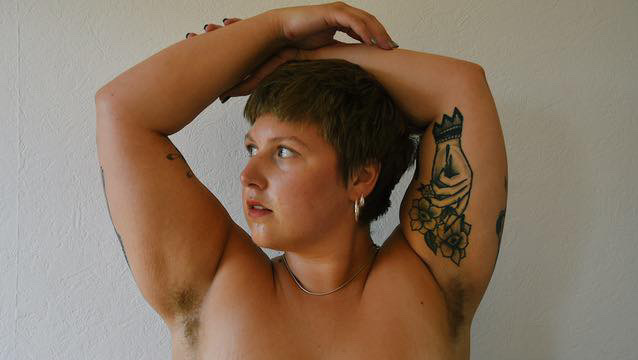
I have always been aware of the ways my body is read or judged. For most of my life, I’ve existed in a larger, queer body. One that suffers from Polycystic Ovarian Syndrome, which can cause more body hair growth, another feature that doesn’t necessarily fit into mainstream ideals of beauty. In the past, the constant awareness that others may have perceived my body as ‘wrong’ or ‘less than’ created a barrier to vulnerability, which made it harder to trust affection from others or believe that someone’s desire is genuine.
By modelling, I not only practice fat liberation but assert my right to be seen – not as a spectacle or symbol, but a person with agency and complexity. Art spaces often claim to celebrate all bodies, but dominant aesthetic standards persistently privilege thinness, whiteness and normative gender expressions. My curiosity of these dynamics is what led me to pursue my master’s degree in social anthropology at the School of Oriental and African Studies, and continues to feed my own artistic practices.
“There’s no sort of aesthetic judgement, I’m just reduced to shape, light and dark – and strangely this is quite reassuring for me.”
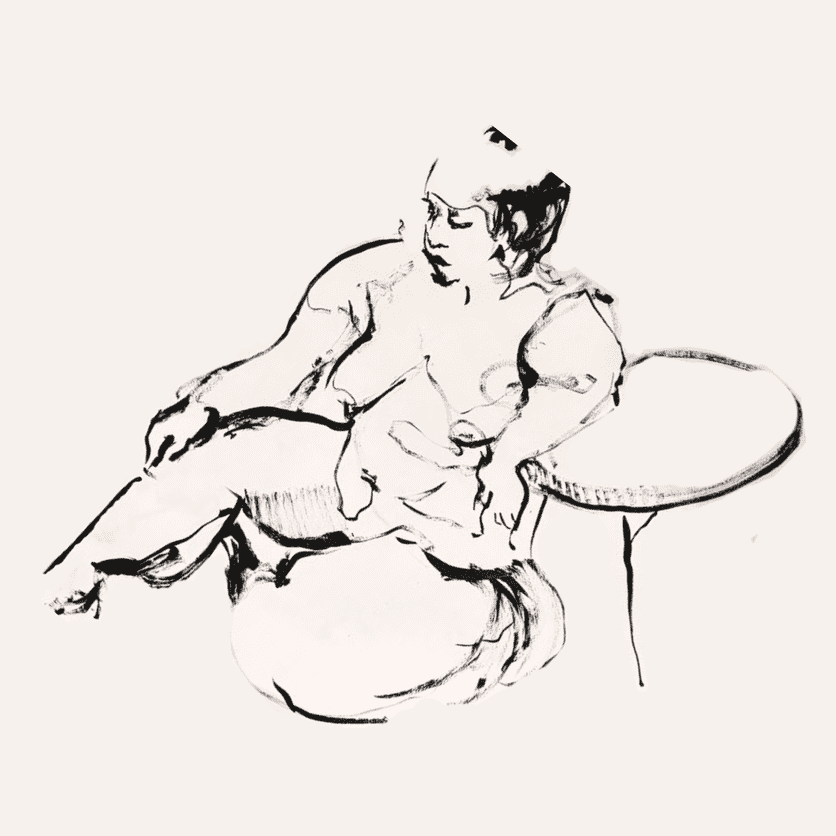
I enjoy the creative process and relationship between me and the artist. Without me, there would be no art. It feels like another way I can engage with artistic practices that doesn’t require me putting pencil to paper. The only negative reaction I occasionally find myself having about the art produced, is if my femininity is emphasised. My fatness perhaps feminises me in many ways because it gives me the kind of shapely figure often found in Renaissance art. As someone who is gender queer, it can be uncomfortable seeing myself in that light. It’s often drawings done by women where there’s an emphasis on my hips and bust, or an hourglass figure that isn’t there. But it’s funny because I also understand that by feminising my body, they’re feminising their art, and therefore themselves. So, it’s more representative of the artist than me.
It’s really interesting to be confronted with 25 different hand drawn perspectives of your body at the end of a session. It’s a good test of my own feelings towards my body, because I realised, I didn’t feel that much looking at them. There’s no sort of aesthetic judgement, I’m just reduced to shape, light and dark – and strangely this is quite reassuring for me. Everyone has a subjective view of my body, and I can’t control how I am represented in someone else’s art, and to be able to let go has been very freeing.
Luce Howard, 25, New Cross