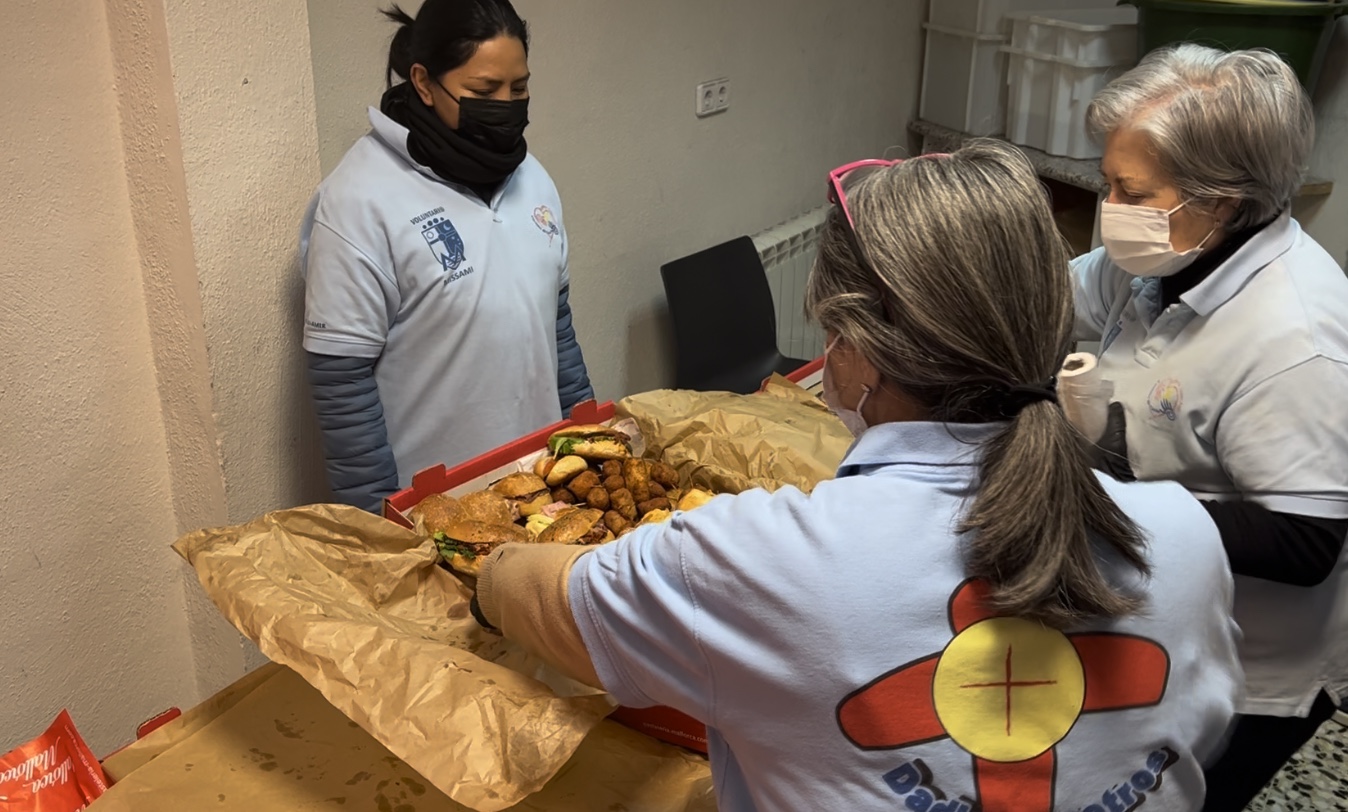
“As a child of God, my mission on earth is to lend a hand to those most in need,” says Cristina Martin, a volunteer at Cachito de Cielo. The name translates to a small piece of heaven, giving sense to their cause: serving a warm breakfast every morning to those in need. Founded by a group of religious missionaries and nestled in the heart of Madrid, the charity is guided by the belief that “God does not abandon anyone; he walks with all of us”.
Through this conviction, Cachito de Cielo provides both material and spiritual support to some of the city’s most vulnerable residents, turning everyday acts of care into moments of hope.
In many societies today, a university degree or a steady job is no longer a guarantee against hardship. In Madrid, about 26% of the resident population was at risk of poverty or social exclusion (AROPE rate) in 2025, according to El País. Hunger queues, once a sign of acute crises, have become a quiet fixture in the city’s early mornings.
At Cachito de Cielo, rising living costs and economic pressures have reshaped daily routines. Where families once gathered inside a modest social dining room, they now wait outside while 10 to 20 volunteers prepare and hand out breakfasts from within. One of the sisters leading the organisation puts it simply: their doors remain open, in spirit if not always in practice, to anyone who is struggling.
Every day, from ten until late morning, the doors open to anyone, regardless of race, culture, or religion. Inside, a small team of volunteers works steadily, preparing breakfast bags filled with sweet and savoury items, passing them through the doorway.
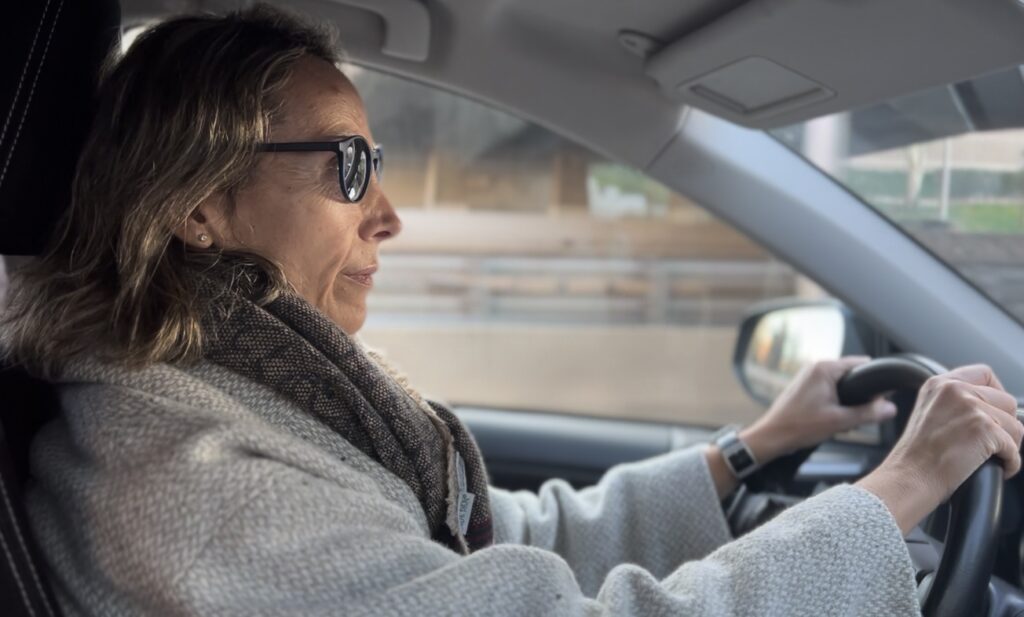
Beyond these visible, frontline efforts, there is also a network of volunteers working quietly behind the scenes to make each morning possible. One of them is Cristina Martin, a 50-year-old mother, who is responsible for collecting donated food. “It takes me around 30 minutes to get from my house to the bakery,” she explains. “When I arrive, I collect and pack all the boxes of food they give me and then take them to the food bank. In total, I dedicate about an hour of my mornings to this very special cause.”
Martin’s contribution goes far beyond the simple act of transport. For the past five years, she has woven this responsibility into her daily routine, arriving at Pastelería Mallorca early each morning to collect freshly baked goods. Rain or cold rarely deters her; the timely arrival of the food shapes the day for the people waiting at the charity, and she is determined to play her part. On some mornings, she brings her two children, aged seven and nine, along before taking them to school. “I want them to see the reality of life,” she explains. “It’s an act of consciousness, so they understand how fortunate we are and why helping others matters.”
Her dedication comes with personal trade-offs. “Sometimes I miss my Pilates class,” she admits, “but seeing the volunteers in action and knowing the people we help makes it worth it. I make time for exercise later, it’s just shifted in the day.”
Once the boxes arrive at Cachito de Cielo, other volunteers unpack, sort, and prepare the contents for distribution. Inside the cardboard boxes is a varied selection, ranging from simple pastries to hearty sandwiches, all donated by Pastelería Mallorca, one of Madrid’s most celebrated artisan bakeries. Cristina hands the boxes to Miguel, who sorts the sandwiches and pastries into individual bags, while Ana checks the drinks and ensures a balanced mix. Then Laura and Javier take the prepared bags to the distribution point, where Sofia greets recipients with a warm smile and hands them their breakfast.
For Cristina, this daily journey is not about recognition but about consistency. On the way to school, after helping with the cause, her children chat about the families they saw and the sandwiches they packed, small gestures that show they are learning empathy by seeing their mother’s commitment in action.
In Madrid, several organisations work with the Red Cross to ensure that no one goes hungry. The Banco de Alimentos de Madrid channels donate food to local charities and community centres, while Cáritas Diocesana de Madrid runs food points that provide families with essential packs and support. Yet, people keep returning to Cachito de Cielo, drawn by its exclusive partnership with Pastelería Mallorca, where the food’s consistently high quality sets it apart. Founded in 1931, Pastelería Mallorca first earned acclaim for its freshly baked ensaimadas, light spiral pastries, and torteles, sweet dough treats often filled with cream or jam, both staples of Spanish baking. Today, it has grown across Madrid, offering an array of pastries, chocolates, and gourmet products, all made daily in its own production kitchens (known in Spanish as obradores), where bakers and pastry chefs prepare the products on site.
A recent advancement made by the charity has been the preparation of additional takeaway “goodie bags”, ensuring no food goes unused and that recipients have something to sustain themselves throughout the rest of the day. These bags usually include a mix of pastries, sandwiches, or bread, along with essential liquids such as milk, water, and juices, all thoughtfully packed to be easy to carry and consume throughout the day.
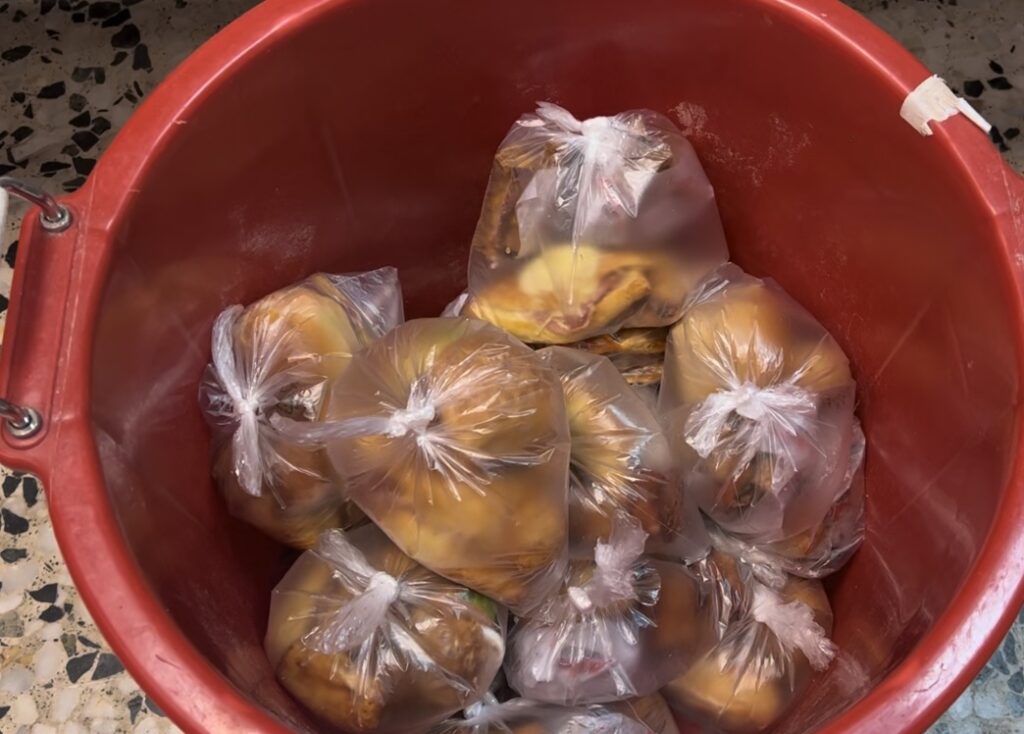
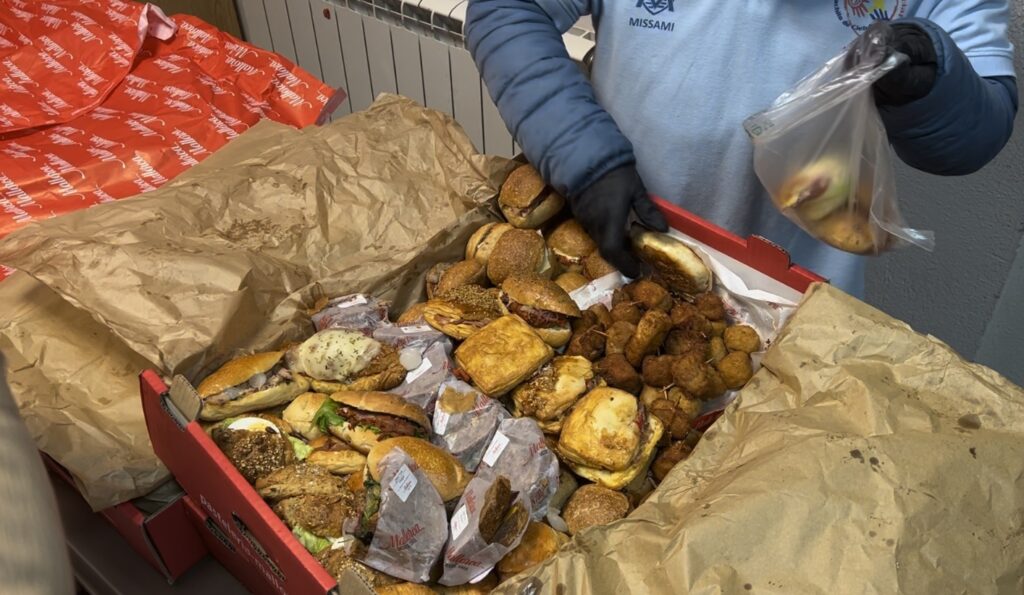
For many people, this gesture provides more than just nourishment; it offers reassurance and dignity, allowing them to face the hours ahead without worrying about their next meal.
“I really appreciate what they do here,” says José Miguel, a 25-year-old carpenter. “I take one of these goodie bags to work every day. It keeps me going through long shifts and gives me peace of mind knowing I won’t have to skip a meal.”
As Sister Rosa María Ateza, who oversees the charity’s social outreach work, stresses, the situation is becoming increasingly severe, with the need for support greater than ever. “Many of the people who come to us are living on the streets,” she says. “When that is your reality, there can be no filters or conditions. We do not ask questions or turn anyone away. If someone is hungry and asks for food, they are welcome here.”
Beyond the charity itself, Madrid faces a growing social challenge. According to the European Anti‑Poverty Network (EAPN) and data from the Spanish National Statistics Institute, around 1.46 million people in the Community of Madrid — roughly 21 per cent of the population — are at risk of poverty or social exclusion, a figure that has risen over the past year. More than 320,000 children, about 31 per cent of the region’s minors, live in this situation, while nearly 42 per cent of families report struggling to make ends meet, as reported by EAPNMadrid and Diario de Madrid. These figures are striking, given that Madrid is one of the wealthiest regions in Spain, highlighting deepening inequality and the structural nature of poverty that drives many to seek essential support such as food and shelter.
Rosa María is quick to downplay her own efforts. “What we are doing is nothing,” she says softly, “it’s the least that could be done for these people.” She paints a stark picture of the mornings faced by many who arrive at the centre. Some have spent the night sleeping on the street, while others, if they were fortunate, slept in a small room without heating. By the time they reach the food bank, they are often forced to queue in freezing temperatures, at times dropping as low as minus two, simply to receive something warm to eat.
For Rosa María, this work is inseparable from her faith. She speaks of her union with God as the source of her commitment and of the gratitude she feels each day for the basic comforts she has, comforts she knows are absent for many of those who wait quietly in front of her.
However, she is careful to stress that this work is not about feeling sorry for anyone. As she explains, “We don’t have to feel sorry; these people are equal to us.” They are not objects of pity, but people who deserve empathy, respect, and to be treated in the best way possible. When they are approached in this way, those queuing in line respond positively, engaging more openly because they feel recognised as equals.
It is within this context that many volunteers find their way to the charity, their own life experiences often mirroring those of the people they now support. Marta Tornos, 55, moves with quiet purpose between the tables at Cachito de Cielo, passing out breakfast bags with a warm smile and a few words of encouragement for each person who arrives. She folds sandwiches neatly, checks the drinks, and makes sure nothing is overlooked. There is a calm efficiency to her movements, the kind that comes from years of practice and genuine care.
What makes her presence here remarkable, however, is a truth she does not often share: a little over a decade ago, she was one of the people standing in this very queue.
Marta had weathered the first wave of the Spanish financial crisis in 2008, keeping her role as an administrative assistant at a small manufacturing company in Madrid. By 2009, however, the company could no longer cope with falling orders and unpaid clients. She was called into the office and told that her post had been eliminated. “For a whole year, I felt like I had been saved, like I had made it through the worst. And then suddenly, everything fell apart. You never really know how hard it can hit until it happens to you,” she recalls. Bills piled up, savings dwindled, and even necessities became a struggle. Eventually, she found herself queuing for breakfast at the charity, a humbling experience she could never have imagined.
“That hardship is what drives me now to help others facing similar struggles, offering both meals and hope,” Marta explains. “Today I am one of the volunteers here, but there was a time when I was one of those people standing in line after losing my job. With God’s guidance, I found my way again, and that is why I am here helping others.”
At Cachito de Cielo, breakfast is more than just a meal. It is a taste of dignity, a moment of human connection, and a quiet reminder for both those who serve and those who receive that no one is truly alone. As Marta concludes the interview, she adds softly, “You never know when you might find yourself standing in that line.”
Leave a Reply