
In a few seconds, she aged thirty years. On YouTube, Qiao Biluo was caught in her own trap. For weeks, the well known Chinese vlogger had been posing to her fans as a young video game enthusiast with smooth skin and fine features. But, in the middle of a live webcast, the mask fell off.
She is one of many individuals who on a daily basis use filters on social media to fit into the beauty standards that have been created by society, more specifically generation Z. Filters are appearance-altering digital effects that have become more facially recognisable due to computer-generated augmented reality. Fake freckles, altered eye shape, fake eyelashes … The possibilities to change your digital “self” are endless. The problem? This new obsession could well create some drifts. Social media has allowed one specific, wanted face shape to be embraced by the masses… one with thinner noses, enlarged eyes, voluminous upper lips and higher eyelids.
The issue that surfaces from a high exposure to these features that alter your own is a loss of self-love observed in this generation. It creates this constant want and need to resemble the typical face which has been created by the social media generation through the making of filters.
The digital filter used by the “young” woman was suddenly interrupted, revealing a 50-year-old woman with makeup removed, having little to do with her 20-year-old “avatar“. It only took a few hours for the story of the “fake face” to make the rounds of social networks, asking a very real question: behind the filters, where is the limit between reality and illusion?
On social media, the list of “beauty filters” is endless and they conform to the beauty ideals set by our generation. These digital, perfected versions of ourselves we are used to seeing have now been normalized and have become the new expectations of what we should look like in real life. What to feed the complexes and the desire to resort to plastic surgery. In consequence, this has caused an increased number of individuals to get lip injections, for example, to match these trends. However, these trends are ephemeral, but if they are taken too seriously they will have a permanent impact on the ones who are socially forced into changing themselves to look like these filters. As of a study carried out in 2019, 18-34 year olds are even more likely than 50-60 year olds to have plastic surgery. This is a direct consequence of the use of filters on social media.
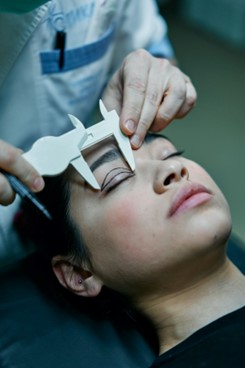
Furthermore, the kings and queens of social media, celebrities, reality stars and influencers reflect both this female and male ideal which is often impossible to achieve even when undergoing plastic surgery. The youth being exposed to these social media celebrities on a daily basis results in a desire to look like them because they are the ones trending. Lilly, 21 years old, says, “I have wanted lip fillers for a year now because I find my lips to be too small and not have a nice enough shape. I always envy the features of the celebrities I follow on Instagram or Tiktok, I think they look beautiful. I can’t take any pictures without using filters that increase my lip size and give me bigger eyes, I can’t stand myself in real life.”
Some reality TV contestants have also become “real commercial agents” according to Dr. Eric Plot. Many of them do not hesitate to offer their subscribers promotional codes to undergo surgical procedures, as they would for a simple teeth whitening or hair removal session. This makes plastic surgery seem very safe and expected of generation Z, which is not the case at all as there can be extremely severe long term consequences.
Dr. Plot says, “the youth is completely absorbed and fascinated” by this type of intervention and that it “does not have a critical, outside perspective on them”. However, the plastic surgeon emphasizes on the fact that no one should underestimate the risks of plastic surgery. He himself has observed many abuses on social media, where acts are proposed at “attractive rates for very cheap prices”.
According to him, some injections are “performed by people who are not doctors” in ephemeral rooms. And this illegal practice of medicine can have serious consequences, sometimes irreversible, such as necrosis for example. Like cosmetic surgery, cosmetic medicine “requires knowledge of anatomy and the dangers of products”, which the general public cannot (in theory) obtain. So be very careful before agreeing to have someone change your appearance
Sylvie Richard, 58, says; “I have been a plastic surgeon for more than 30 years now and it has only been in the past 7 or so years that I’ve really seen a change in the customers that step foot in my office. I have had increasing amounts of teenagers, especially girls, who will walk in and show me selfies of celebrities or influencers begging me to modify their facial features to match theirs. The customers I used to take care of at the beginning of my career were people coming in to restore functions in the face or body if they had suffered severe illnesses or injuries, however, now the primary reason, 95% of the time, is customers coming in to enhance certain facial features they saw from filters used on social media.”
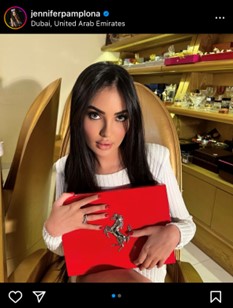
There are numerous stories like hers. Jennifer Pamplona, a model, recently went viral when she said she had undergone 40 cosmetic surgeries over a total of 12 years in the hopes of looking like Kim Kardashian. Pamplona is believed to have spent almost $600K. When analyzed, this behavior is a sign of a mental illness, dysmorphia.
Sylvie continues; “Plastic surgery has taken a turn from doing it to feel better about your own features, to now feeling better about yourself because you have achieved someone else’s look. I find it very sad as it seems that this generation has lost all clarity in their head, they are so caught up in social media trends that they not only lose themselves in them, but also lose the awareness they have on themselves.”
At the end of 2018 already, three doctors from the Department of Dermatology at Boston University had published a study in the American medical journal JAMA Facial Plastic Surgery where they were concerned about the appearance of a “Snapchat dysmorphia”, in other words, an exaggerated judgment on a physical defect. This is a term that was first coined by the British plastic surgeon Tijion Esho to designate a pathology classified as an obsessive-compulsive disorder and characterized by a confusion between one’s real identity and virtual identity.
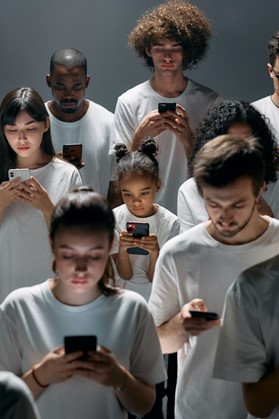
This identity crisis observed in generation Z has raised awareness for the creators of these beauty filters. According to the company Spark AR, in charge of developing these effects in augmented reality designed for the social network, these filters should soon disappear from Instagram. “We want Spark AR effects to provide a positive experience, so we will re-evaluate our existing policies regarding the well-being of users,” was said in a statement published on Facebook. As a result, any filters related to cosmetic surgery will soon be removed and banned while the approval of any new effects will be delayed as a precautionary measure.