In a city where live concerts often mean expensive tickets and over-crowded venues, intimate gigs are being held in living rooms, gardens, basements, and kitchens
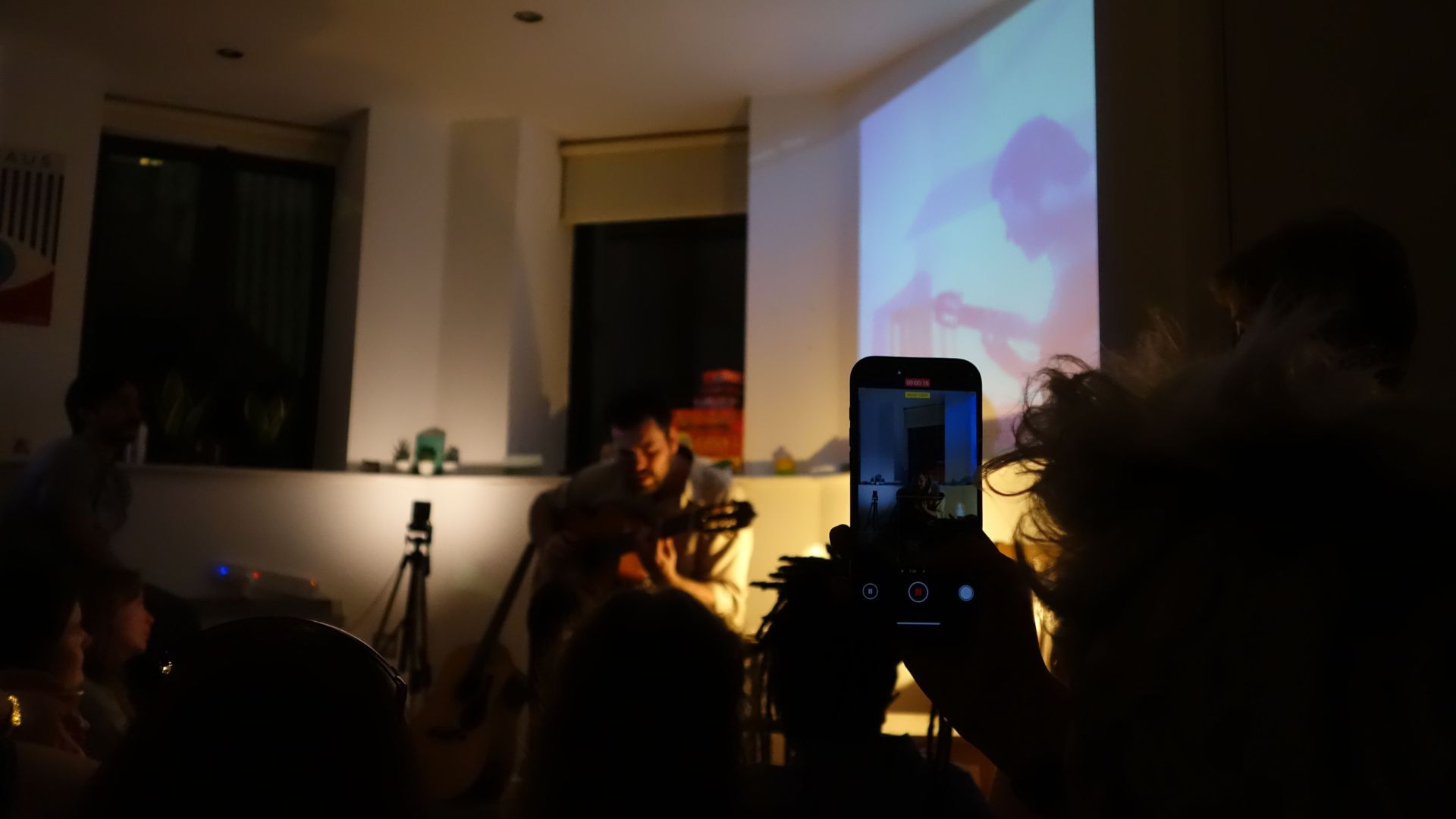
In a dimly lit East London living room, 30 people sit cross-legged on the floor, perched on armrests or leaning against walls. The air hums with anticipation as lulu melons, 24, singer, songwriter, and co-host of lulu’s house 3, tunes his guitar in the corner. There’s no stage, no security barrier, no £7 pints – just soft lighting, mismatched cushions, and steaming cups of tea being passed from hand to hand, as attendees wait for the gig to begin.
In 2025, the music industry may look glossier than ever, but for many artists, it’s harder than ever to make a living. Streaming songs pays pennies and AI-generated music now floods Spotify playlists. The slow death of grassroots venues has compounded the problem, with over 120 small UK venues closing in the last five years due to rent hikes, noise complaints, and funding shortages.
All these factors have contributed to this quiet cultural shift towards hosting live music shows in a domestic setting. House gigs, once considered a fringe practice, are on the rise, not just as a workaround for struggling musicians, but as an intentional alternative to the oversaturated, overpriced, and increasingly corporate live music industry.
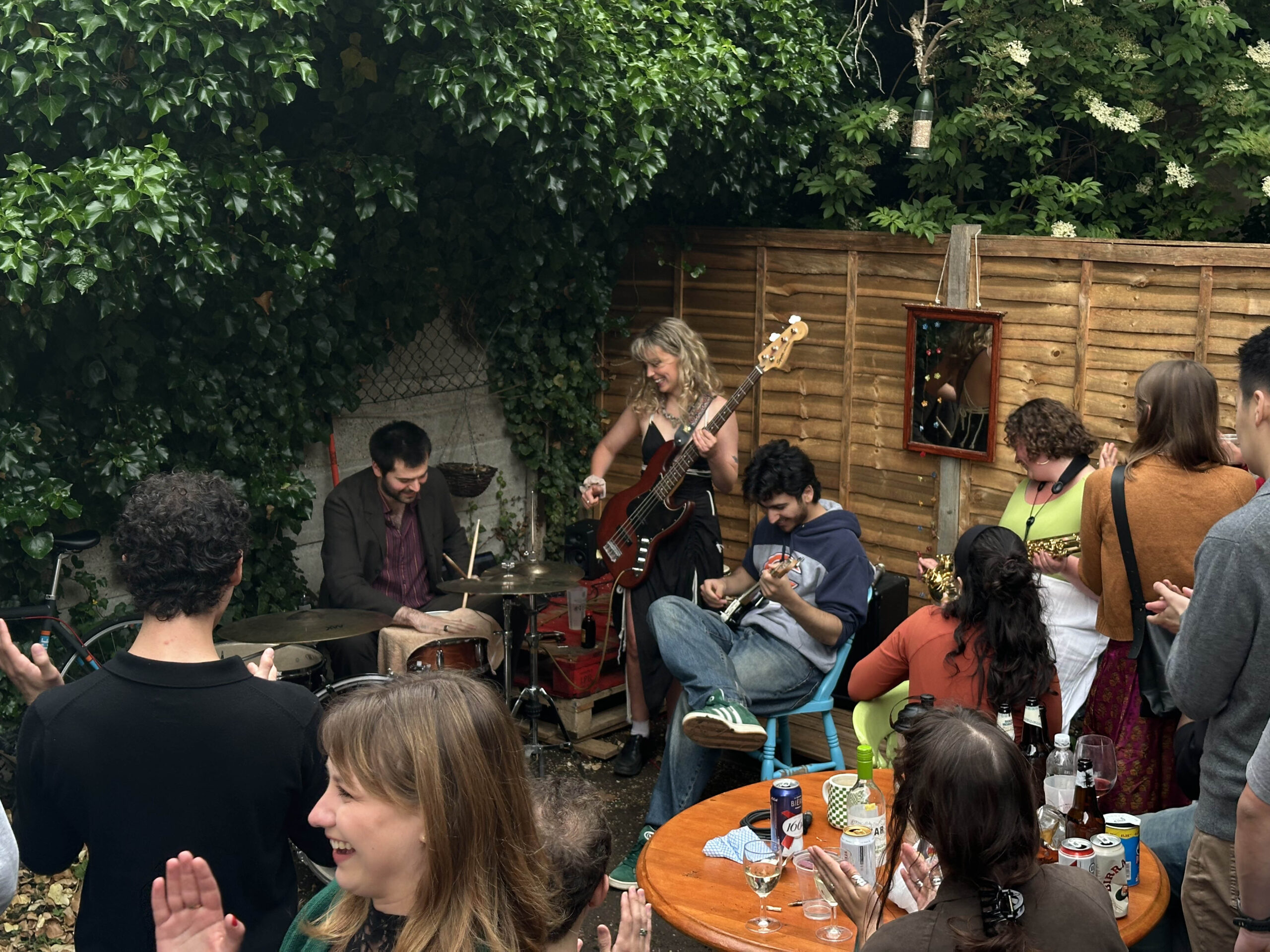
House gigs are part of a growing movement, becoming the new way to experience live music Pic. Gery Hristova
Kaz Komolafe, Executive Director of Experiences at Sofar Sounds, a series of live music events in unique, small venues like living rooms, shops, and rooftops, reflects on the beginnings of this intimate live music movement: “Our founder invited friends to his flat in North London with one simple ask – be truly present and connect with each other and the artists. That spirit still drives this movement today.”
Over the past year, demand for small-scale, intimate shows has surged, with both fans and artists craving real engagement. “Artists are curating VIP fan experiences, launching albums via house gigs, even creating their own festivals,” Komolafe explains.
While house gigs have existed for decades, their roots run deeper than many realise. In the 1970s and 80s, punk and hardcore bands often performed in squats and shared flats – out of necessity, rebellion, or both. Joe Strummer’s early band, The 101ers, were part of this DIY scene, playing impromptu sets in friends’ houses and tiny rooms before Strummer went on to form The Clash. Folk musicians have long relied on intimate house concerts as a way to tour sustainably, especially in remote areas where venues are scarce. These weren’t polished performances; they were communal events built on trust, spontaneity, and shared passion.
“There’s pressure to sell tickets, fill rooms, push numbers. House gigs feel like when you were younger, and people passed a guitar around at a party. It’s just wholesome. There’s space to be vulnerable.”
But something has shifted in the last five years. The pandemic dealt a crushing blow to the live music industry, with the equivalent of at least one venue closing every week and severing the already-tenuous lifeline many emerging artists relied on. Meanwhile, fans, cut off from real-life gatherings, developed a new hunger for connection. Not just the return of gigs, but something more honest and human.
“It all kind of comes from the death of CDs,” says Gideon Black, 25, a musician who recently performed at lulu’s house 3 in Tower Hamlets. “When CDs died, there was no way for musicians to make money – Spotify doesn’t pay artists. So it all had to be based on live shows and commercialising music.”
While Black’s sentiment reflects a common frustration among independent artists, it’s important to note that streaming platforms like Spotify do compensate artists. However, the per-stream payouts are often minimal. Damon Krukowski, a musician and writer, highlights that the maximum one can earn from Spotify royalties is £0.002 per stream, which doesn’t amount to a living wage for most artists. Moreover, starting in 2024, Spotify implemented a policy where tracks receiving fewer than 1,000 streams annually will no longer generate royalties. These funds will instead be redistributed, often favouring larger artists and labels.
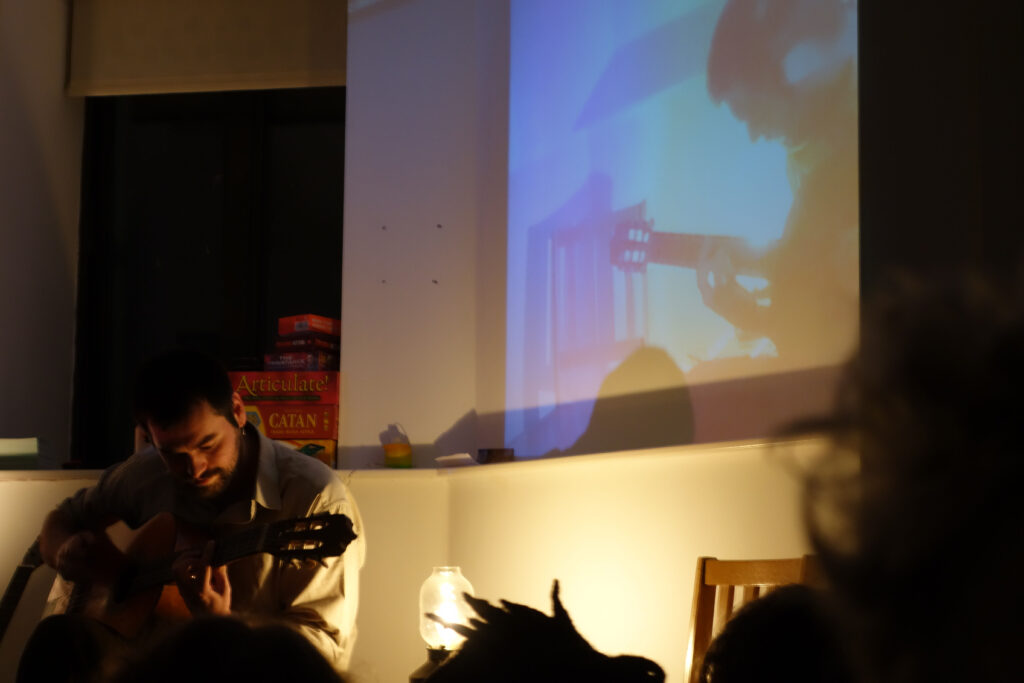
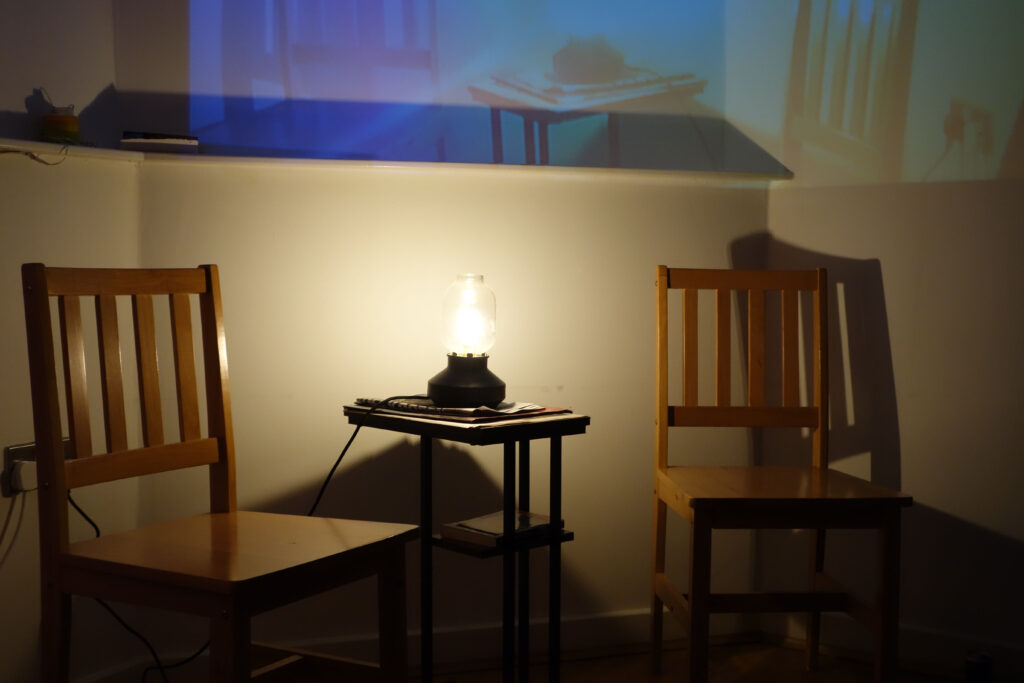
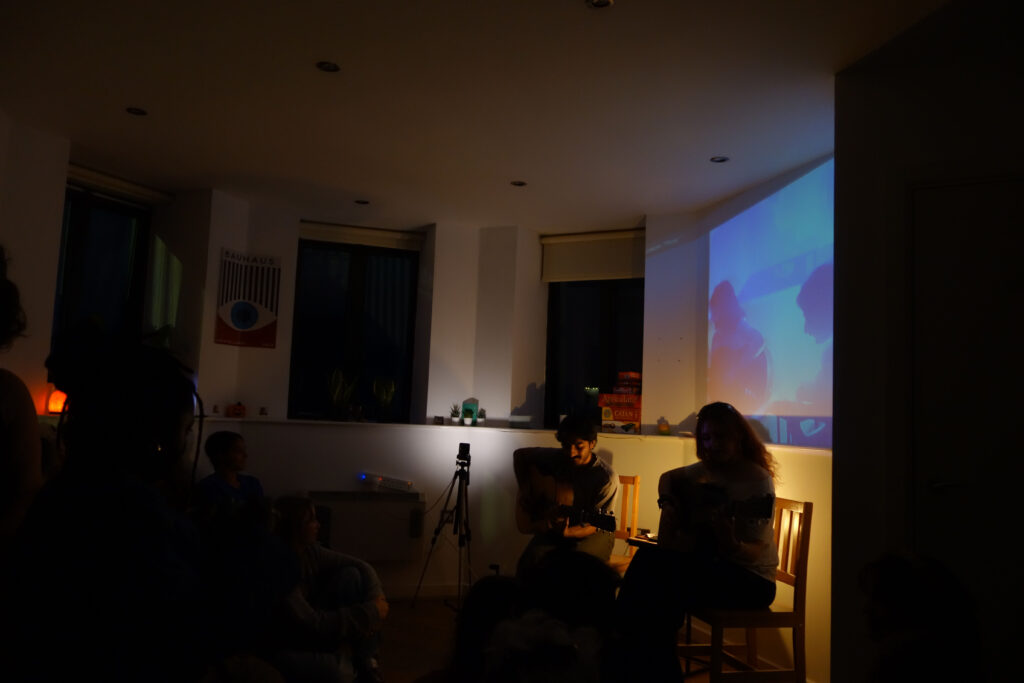
People prefer house gigs as they are cheaper and more convenient. Pic: Gery Hristova
Black continues: “Now, people are starting to value authenticity, realness, imperfection, and that intimate setting makes you feel like, ‘this person is real.’ House gigs feel like a rejection of how over-commercialised live music has become.”
As mainstream music events become increasingly expensive and commercialised, many fans and artists are turning to more intimate alternatives. With arena ticket prices regularly topping £100, and even small club nights inflating to cover rising costs, live music has become unaffordable for many. A recent Guardian report found UK ticket mark-ups reaching 41 per cent, with most of that extra revenue going to resale platforms or promoters, not the artists. In response, a growing number of people are seeking out stripped-back, community-led experiences – like house shows – where connection, not profit, is the priority.
In contrast, a house gig is direct. There’s no middleman. No markup. Often no expectations beyond showing up and playing. With donations or tickets between £10 and £20, musicians frequently report earning more performing for 20 attentive people than they would for 200 distracted drinkers at a bar.
“I’m playing a venue next week,” says Melina Blanco, 22, a singer-songwriter and frequent house gig performer. “The tickets are £17. Who’s going to come? Especially friends who’ve seen me a million times. But at a house gig I can say, ‘Want to hear some songs and meet nice people?’ It feels more like a hybrid house party. It’s low pressure, and no one’s chasing ticket sales.”
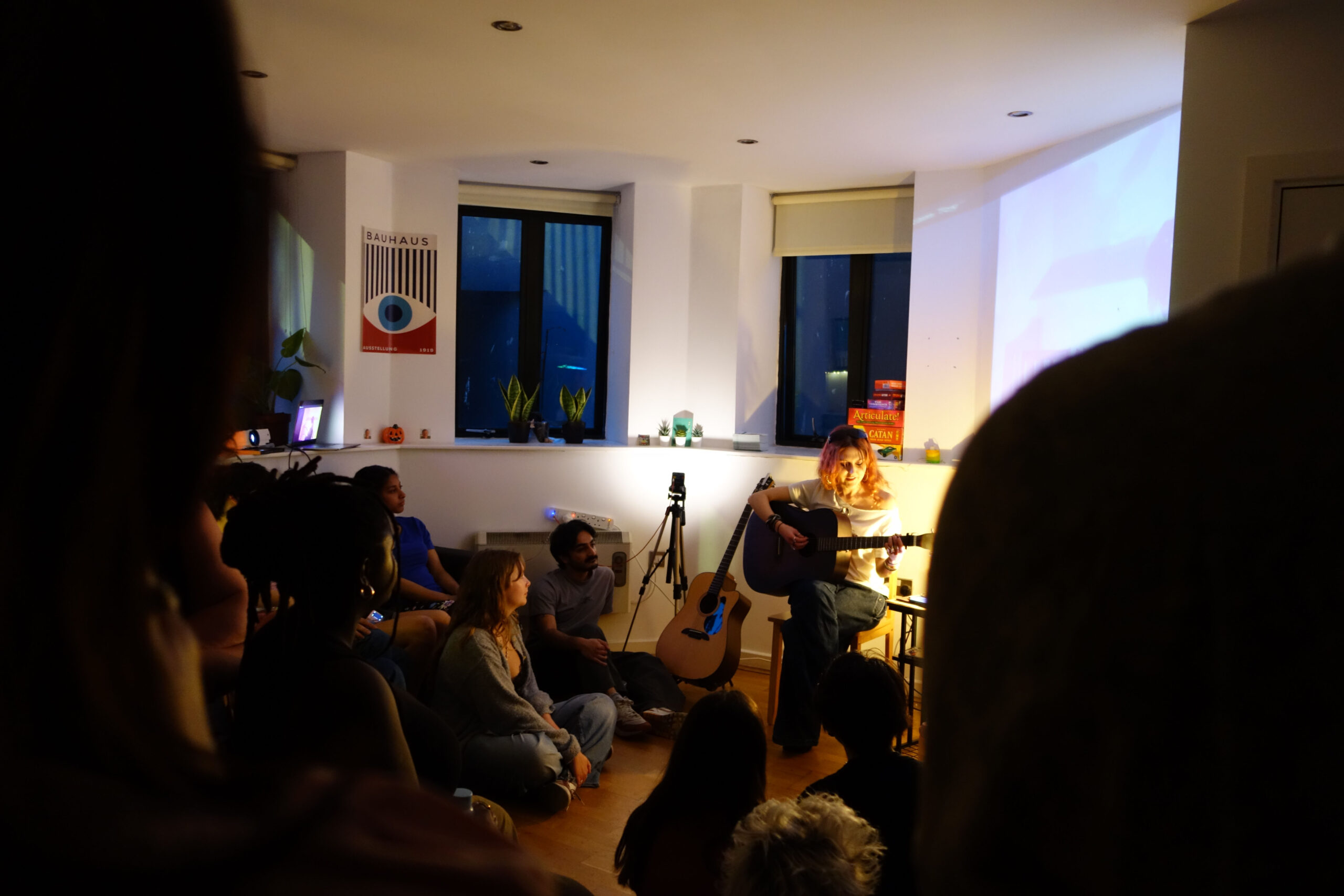
House gigs can help reduce feelings of depression and increase social connection Pic. Gery Hristova
The emotional atmosphere, too, is different. House gigs offer a sanctuary for artists, particularly those navigating the stress of performing in traditional venues.
“Promoters can be really mean,” Melina says. “There’s pressure to sell tickets, fill rooms, push numbers. House gigs feel like when you were younger, and people passed a guitar around at a party. It’s just wholesome. There’s space to be vulnerable.
“At the last house show, I performed new songs I’d never played before,” says Tilda Hellstrom, 19 a musician, as she walks into her first lulu’s house gig to support her friend Melina. “It felt safe enough to try something different. Low stakes but still serious enough to feel like a real gig.”
Curation is another key difference. In formal venues, artists are often randomly paired with others for convenience or sales. But house gigs are curated by artists themselves – who they invite, who they play with, and who attends.
“I saw my friend Rahul [lulu melons] play recently at a venue,” says Andy MacKinnon, 26 a gig-goer, artist, and musician, as she smokes outside the flat after the gig. “He was amazing, but the headliner was totally different, and the crowd wasn’t there for him. They were talking over his set, just waiting for their mate. But tonight? Everyone’s here for the vibe. Rahul chose the performers. The audience is intentional. That changes everything.”
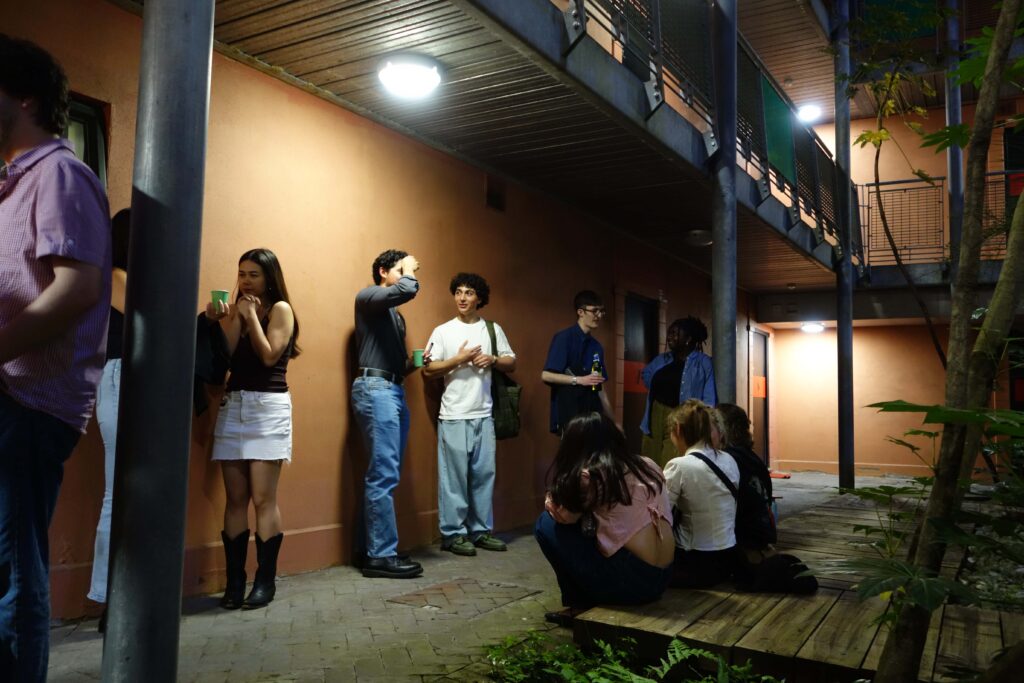
Attendees often gather outdoors before and after performances, enhancing the communal experience Pic. Gery Hristova
For many performers, house gigs offer a sanctuary from the anxiety that often comes with traditional venues. Musician and music student Deni Kineva, 22, explains, “Performing in big venues can be really overwhelming. The noise, the crowd, the pressure to be perfect. House gigs create a space where artists can just focus on the music and connect with people without that weight. It feels safe, supportive, and more like sharing than performing.”
The atmosphere is radically different – intimate and intentional. Lights are low, the audience really listens, and phones stay tucked away or are used to share the moment. The artist is close enough to see sweat or hear a quiver in their voice. When a lyric slips or a joke lands, it only adds to the magic.
After the set, the night often spills over, with performers and audience mingling, sipping wine and tea, or jamming together. It’s both a gig and a gathering.
“Everyone’s connected to music in some way, and you might meet someone who invites you to open for them at their next gig,” Melina says. “It’s a real community builder.”
However, house gigs live in a legal grey area. Without formal licenses or insurance, they rely heavily on discretion and neighbourly goodwill. Hosts keep things low-key: invite-only, no amplified sound past 11pm, and a courteous heads-up to neighbours. It’s a balancing act between community and compliance. As lulu melons says with a laugh, “I just kind of do it and no one has complained yet – so I keep going.”
The house gig won’t replace stadium tours. It doesn’t need to. It’s not about size, production, or spectacle. It’s about connection – a shared breath in a quiet room, a laugh between songs, the feeling of being part of something unrepeatable.
And as long as someone’s willing to move their coffee table, push aside the sofa, and open their front door to strangers for the sake of music, the revolution will keep going with one song, one story, and one living room at a time.
“It’s not just a gig,” says lulu melons. “It’s a moment that only exists because we all showed up and decided to listen. That’s what makes it magic.”