How scent and self-care can heal a generation and a guide on how to make your own
The citrusy smell of mandarin fills the room as Anna Ciecko opens the door to her scent space. The light crackle of a candle wick and warm glow of wax melts greet visitors like an exhale. Straight away, Anna delves into talking about scent notes. “Sweet orange is a heart note,” she says, pulling out tiny bottles and glass jars. Her hands move confidently, measuring drops and blending ingredients. This is not a production line; it’s a ritual, one that started with love and curiosity. .
Interest in essential oils is rising rapidly among young people in their 20s and 30s without them even realising it. On TikTok, rosemary oil for increased hair growth has gone viral, and many don’t even know this counts as an essential oil. What began as beauty advice is turning into a gateway for many young people discovering the broader benefits of scent and natural self-care.
The aromatherapy industry is forecast to grow globally by £3.7 billion by 2030, as more people turn to natural, at-home ways to manage stress and support their wellbeing. In a time marked by digital fatigue, rising stress and anxiety disorders, essential oils have become a quiet form of resistance: small, sensory acts of wellbeing that feel grounding and personal.
Anna, the founder of SoulFlowLondon, began blending essential oils after discovering yoga and the spiritual practices with which it often goes hand in hand. At 46, Anna brings a quiet kind of wisdom that many of us in our twenties are searching for – how to create peace with your hands, one drop at a time. Introduced to oils by her yoga teacher, she became fascinated by their history and healing properties. “I realised they were so powerful,” she says. “They can help with so many conditions.” What started as a hobby soon became a passion and later, a purpose.
She first created simple scents, drawn to how they made a space feel. But she quickly realised that essential oils are not just fragrances; they are tools for emotional and physical support. “At first it was about the smell,” she admits, purchasing only scents she thought she would like. “But then I wanted to understand how to use them properly.” She began reading, researching, and later took an aromatherapy course to ensure safety and effectiveness.
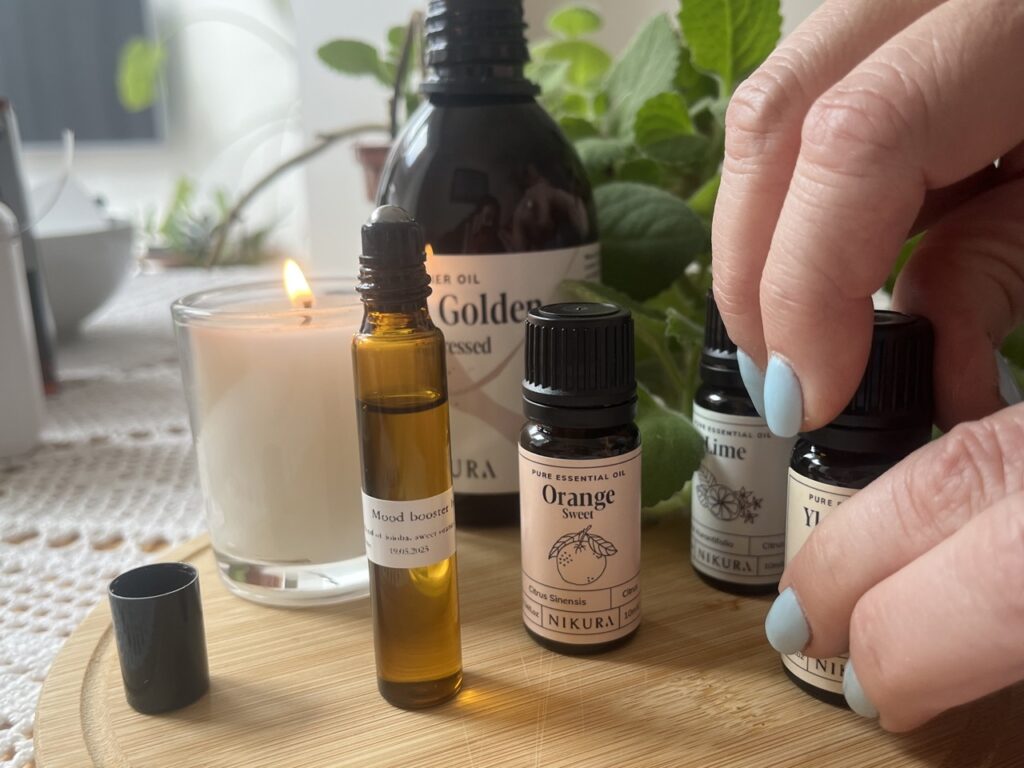
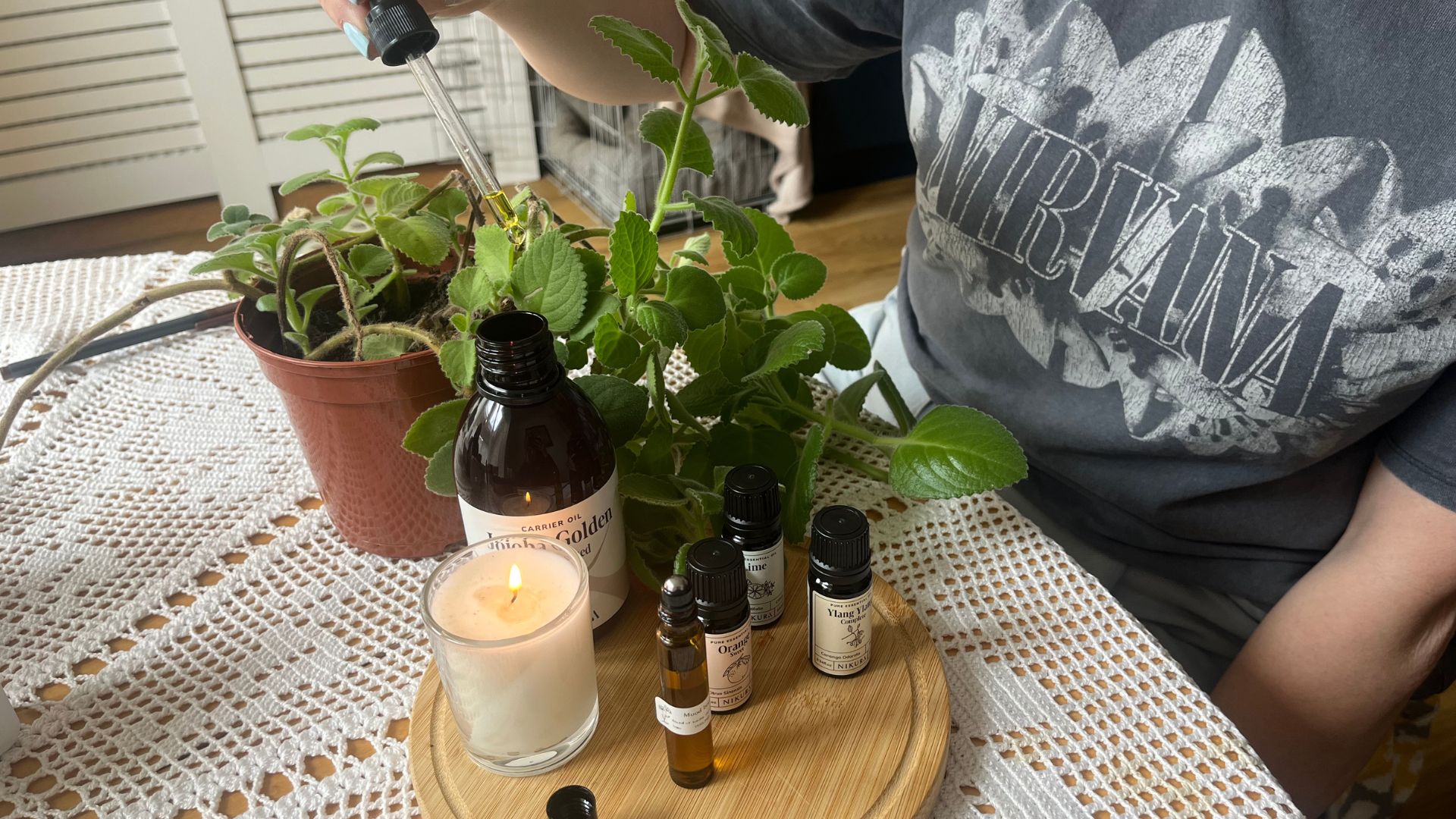
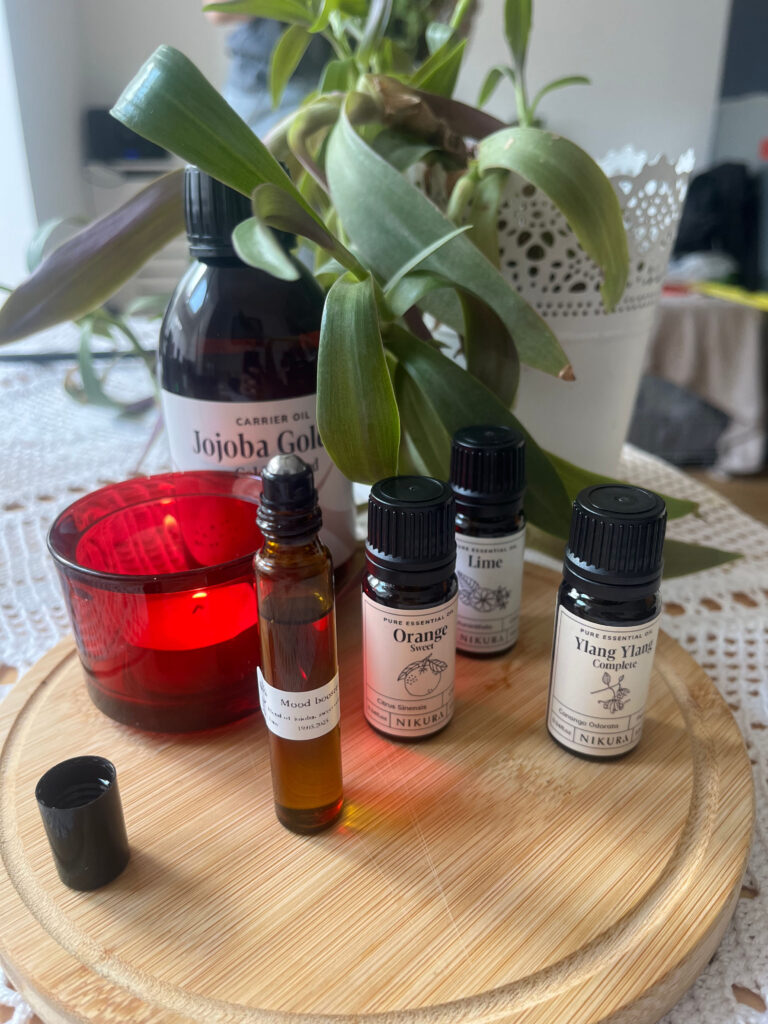
Today, she sells personalised roll-on and pipette oils via Etsy. Her blends are custom-made, based on mood and need. While being interviewed for this piece, Anna created a bespoke oil blend specifically for Maslow and its readers. She named it the ‘Mood Booster’ – a calming roll-on designed to ease stress and anxiety. After learning about Maslow Magazine’s aim to minimise loneliness in young people and remind them of their basic needs, she carefully selected sweet citrus top notes, known for their bright, uplifting properties, and paired them with ylang ylang as the middle note, valued for its soothing effect.
The oils were blended in a ratio of 30:50:20 and mixed with jojoba oil, a gentle carrier that works for most skin types. She explained each step as she worked – how the warmth of the hands helps the oils merge, how the blend should rest for 24 hours to fully merge together and settle. Watching the process unfold gave a deeper understanding of how scent becomes care, and how small rituals can bring real calm.
For Olivia Switala, 21, essential oils became part of a wider self-care routine. She first came across SoulFlow London while looking for something more personalised. “What appealed to me was knowing the oils were blended specifically for me,” she says. “There was even a note explaining what each ingredient was chosen for.”
She uses one blend on her pressure points in the evening as a way to unwind, and sometimes for a lymphatic drainage massage – something she says helps her slow down and reconnect with her body after a busy day. A second oil, used with her gua sha tool, has become part of her facial care. “It’s not just skincare – it’s part of my wind-down routine. It makes me feel more present.” For Olivia, these small rituals have become a quiet way to care for herself, both physically and mentally.
As she measured the oils drop by drop into the tiny glass bottle, Anna explained how each note played a crucial role. “Sweet orange lifts you up, it clears your head, reducing stress and anxiety,” she says. “Ylang ylang calms the nerves – it slows you down.” She added lime for its sharp, clean energy, then chose jojoba as the carrier oil because of its lightweight, allergy friendly properties.
With young people struggling to slow the constant rush of life in their 20s – and more likely to experience anxiety than any other age group in the UK – this blend was designed with that in mind: calming, uplifting, and intentionally simple. Before sealing the bottle, she gently rolled it between her palms. “This warms the oils and starts the merging,” she says. “You have to give it 24 hours for the blend to truly come alive.”
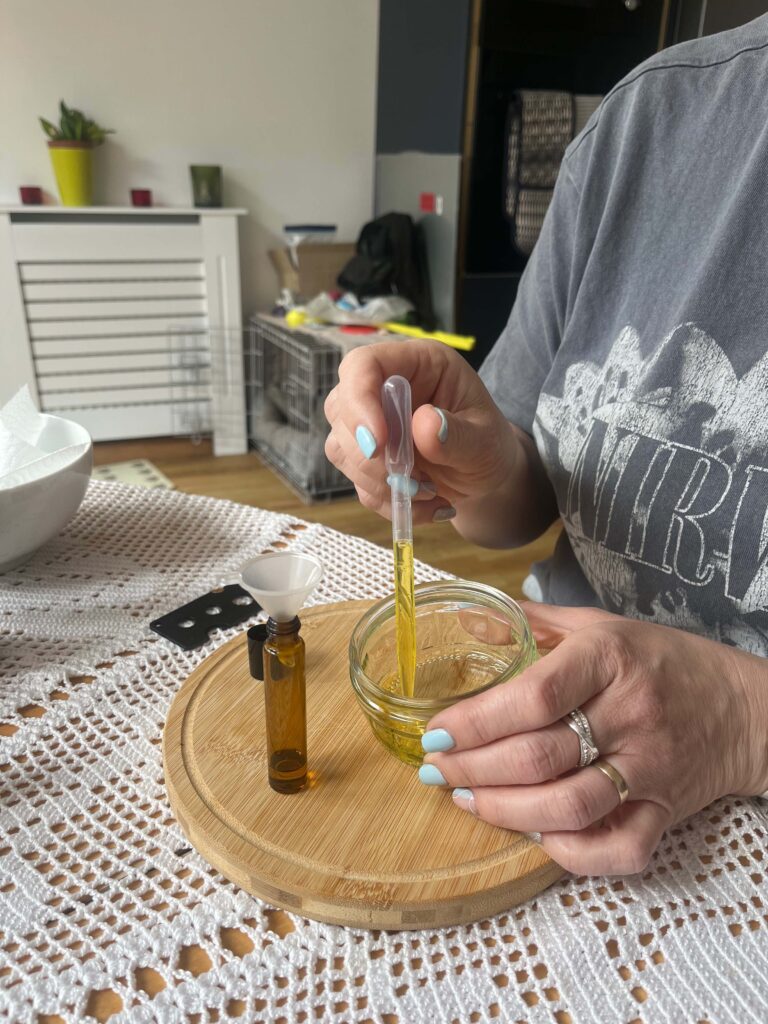
People off all ages buy Anna’s oils, but mostly young people. Pics: Ola Mendykowska
Her clients are mostly in their 20s and 30s. Often overwhelmed, often burnt out. Anna recalls a customer who was sceptical until she tried a blend for knee pain. “She didn’t believe it would help. But the next morning she told me she woke up pain-free. That was when I realised I could make a real difference.”
Physiotherapist Tiffany Law notes that while some patients report relaxation benefits from aromatherapy, essential oils should not be seen as a replacement for medical advice or conventional treatment. “In acute cases, such as a knee ligament injury, essential oils are unlikely to speed up healing,” she explains. “However, they may offer support through relaxation or placebo effect, especially when used alongside soft tissue massage.” While not routinely recommended in clinical practice, Law adds that patients who find essential oils beneficial aren’t discouraged from using them.
Anna’s story fits into a much wider shift. Essential oils are now part of a growing DIY wellness movement. In a world of endless scrolling and digital disconnection, these tiny bottles offer something tactile, personal, and slow. Making or using essential oils has become a way to take back control – a small, peaceful rebellion against burnout and over-scheduling.
Blending oils, choosing scents, massaging them into the skin – these acts form small, intentional rituals. And rituals matter.
Scent is strongly linked to memory and emotion. A whiff of lavender might evoke childhood calm; citrus may lift a heavy day. Used mindfully, scent grounds the body in the present moment. “Veins are closest to the skin here,” Anna says, rubbing oil onto her wrists and temples. “They absorb the oils quicker and transport them around the whole body through the bloodstream. It’s gentle, but powerful.”
Claire Blackie, a qualified aromatherapist, believes essential oils have a valuable role to play in supporting young adults’ mental health. “Aromatherapy is a holistic therapy that considers the whole person,” she explains. “Using the right oils in the right way can help reduce issues like anxiety and depression.” While aromatherapists work alongside doctors, their approach often provides the time and personalisation that clinical settings can’t always offer.
As with any wellness practice, essential oils are not miracle cures. But their rise reflects something real: a generational craving for grounding. For things that can be felt, smelled, held.
The blend Anna created for Maslow readers serves as a reminder that peace doesn’t have to come from a screen. That comfort can be carried in a pocket. In a world that moves too fast, this is what slowing down smells like.
In a loud world, maybe it’s the quiet rituals that save us.
Create your own scent ritual
Step 1: Choose your oils: a top note (uplifting), middle note (balancing), and base note (grounding). Try sweet orange, ylang ylang, and frankincense.
Step 2: Mix your oils in a 30:50:20 ratio. Start small: three to five drops total.
Step 3: Add the blend to a carrier oil like jojoba or almond oil (roughly 10ml).
Step 4: Shake gently and let it rest for 24 hours.
Step 5: Apply to pulse points – wrists, temples, neck – and inhale deeply.
*A personalised blend can also be purchased from SoulFlowLondon for £9.99.