
We exist in a world ruled by technology, but the tyranny of our digital addiction can be challenged by small differences
We are often fed the mantra that social media is a glowing beacon of progress and connectivity in society. “Facebook was not originally created to be a company. It was built to accomplish a social mission – to make the world more open and connected,” tech billionaire Mark Zuckerberg evangelised in a 2012 speech. But 25-year-old Adele Zeynep-Walton begs to differ.
“It definitely feels like there’s a growing tide of people turning against that lie of connection that we’ve been sold by social media companies,” she says, dialled into a Zoom call from a cafe in central London.
The prolific journalist and online safety campaigner is in the midst of promoting her recently released book, Logging Off: The Human Cost of Our Digital World. Adele charts the harms social media causes within our lives, from struggles around body image, the spread of fake news, the rise of misogyny and the violations of surveillance culture.
Born and raised just outside of Southampton, where she is still based, Adele spent her teenage years on social media and her coming of age was shaped by the interactions she had with the digital sphere. It was an “impressionable age,” she says. “For those of us who grew up with social media as teenagers, we were told that this is where you’re going to meet all your friends and feel connected.”
For Adele, this expectation of connectivity and empowerment was, in reality, a complete falsehood. “Since growing up, we’re feeling the lack of those kinds of connections in our communities, in our lives and in our relationships,” she says. “We’ve got this dependency on those platforms, but actually the payoff is not benefiting us.”
It was once believed that social media possessed the potential to unleash an age of hyper-connectivity that would change people’s lives for the better. Before the dawn of iPad kids, a generation was exposed to social media platforms like lab rats in a scientific experiment. Now, the devastating extent to which social media damages the lives of individuals, families and society at large is becoming increasingly clear with each batch of research and news cycle revealing yet another tragedy prompted by excessive internet usage.
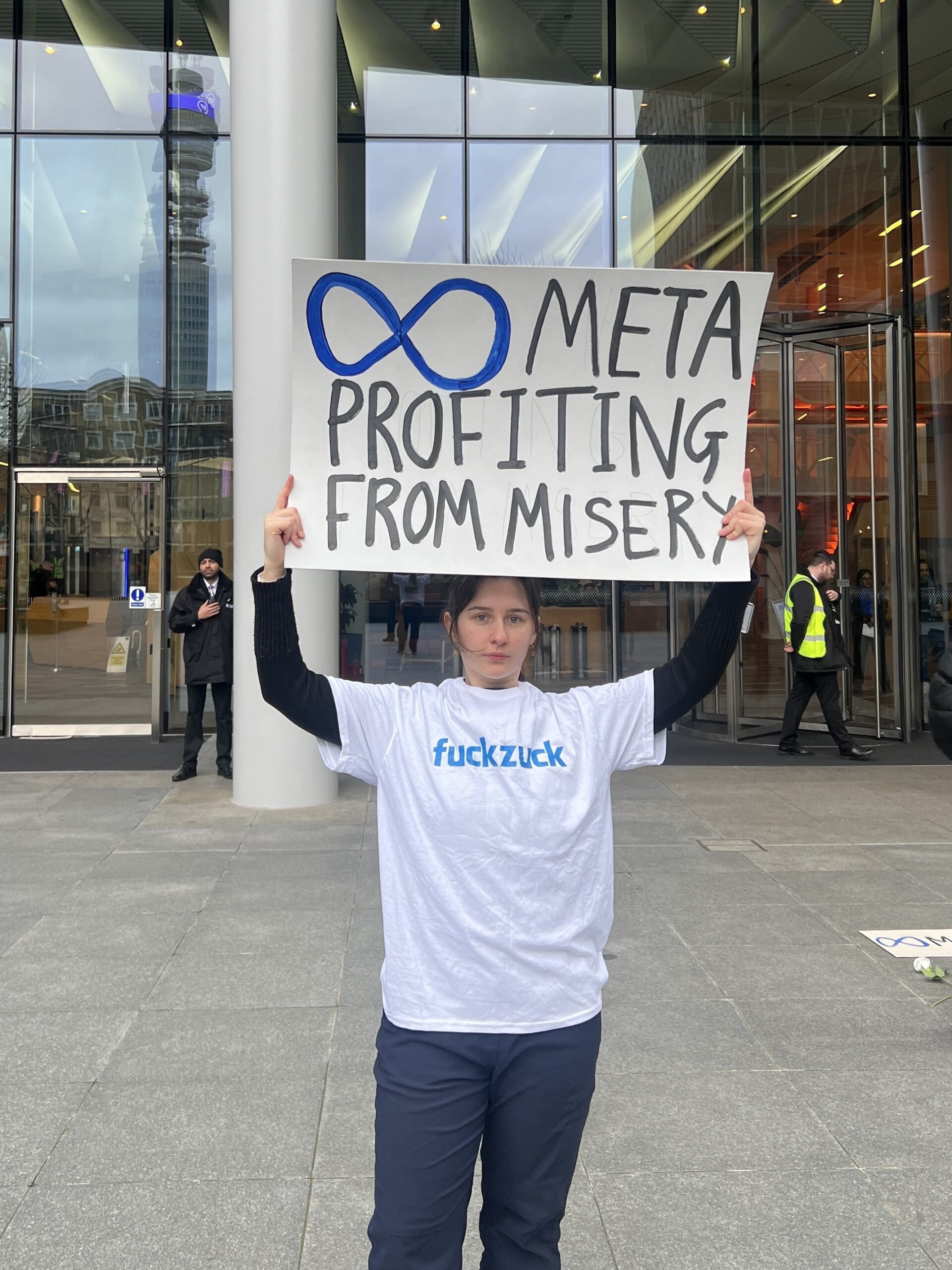
Info and pic
According to research by King’s College London, teenagers with ‘problematic smartphone use’ (thoughts and feelings linked to smartphones that resemble an addiction) are twice as likely to suffer from anxiety. Another study by UCL found that frequent posting on social media greatly increases the risk of adults developing mental health problems, compared to those who ‘passively’ view social media content.
In the introduction to her book, Adele keenly outlines that the distinction between the ‘digital world’ and the ‘real world’ is mistakenly differentiated. In fact, our real lives and digital lives are increasingly intertwined. “Those same harms that we have offline are being mirrored in the online world,” she says. “Not only mirrored, but exacerbated because of the lack of safeguards that we have online, and the pace of technology that’s being released before we are testing it and know it’s safe.”
“Urgency culture” is also part of the problem, she says. “We have a lot of technology, and tech companies are very keen to release their products into the market before they make them safe and before they’re regulated.”
The onus is on governments to intervene in tech corporations and implement safeguarding regulation. Last year, Australia passed a law banning social media for children under 16, becoming the first country in the world to do so. Although the UK has ruled out a similar legislation, the government has recently considered introducing time limits for children on social media. “They have a huge moral, ethical and corporate duty to users,” says Adele. “We regulate other industries, whether it’s food, medicine or cars, because we recognise that users need to be safe using those products. When it comes to social media, we assume that it isn’t a product and that’s why we’ve had a lack of government regulating this sector.”
At its core, the issue is one of profit over people. At the time of writing, X, formerly known as Twitter, is valued at $44bn, and has come under fire for spotlighting right-wing content and fuelling political polarisation. Meta currently has a market value of $1.7tn and the ‘Metaverse’, a virtual universe funded by Zuckerberg which aims to dominate the future of socialising, education, business and commerce, has faced recent accusations of circulating hateful, misogynistic content.
“It’s all well and good getting offline, but if you don’t have the community offline, you don’t have that connection.”
What governments and tech companies are “missing,” says Adele, is the necessity of making their products “safe by design”. They could do this by removing features such as autoplay and infinite scrolling, Adele says. “The reason that we don’t have social media that is safe by design is because addiction by design is the most profitable way of having social media.”
“They are making the most money by keeping us following them, no matter what the cost is. Whether that means that more people are being exposed to harmful content or whether they’re just addicted to their phones. It’s part of their business model that they want to extract as much data and sell as many ads as possible.”
The landscape is bleak, almost dystopian. As our conversation delves into the dangers that digital technology poses to society, I can’t help but notice how central it is to this very discussion. Our conversation wouldn’t have been possible without a video call to facilitate her busy schedule, and I wouldn’t have discovered Adele’s work without stumbling across her Instagram on my For You page. “I’m online a lot, it’s quite ironic,” she says, laughing.
Beginning her career while still an undergraduate student, Adele has built her name and brand as a campaigner who uses the internet to encourage people to log off. It was the tragic suicide of her younger sister Aimee, who was discovered to have used online suicide forums, that spurred Adele to write a book about the harrowing effects of unregulated social media usage. “Before my sister passed, I was already thinking of the idea. Then, when we lost Aimee, I was like ‘I have to do this’, it’s been a process of like three years,” she says.
While Adele primarily focuses on lobbying the government to address the failings of big tech, her efforts are also directed at supporting individuals to decentralise social media from their lives.
The latter proponent has taken effect in the Logging Off Club, a recurring social club Adele founded with her friend, India Blake, whom she met at a rowing club when they were teenagers. “It sounds really posh, but it wasn’t really,” says India. The idea came from a casual chat at Adele’s birthday party last summer. “We were talking about the ways that we self-regulate our screen time and our habits. We realised that every single one of us was doing a different thing in order to try and wage this war against big tech,” says Adele.

“Once we had that open conversation, India was like, ‘Well, what’s the alternative?’ We need to offer each other something else to fill that gap because it’s all well and good getting offline, but if you don’t have the community offline, you don’t have that connection.”
The Logging Off Club functions as a ‘third space.’ There isn’t a strict no-phone policy, but attendees are encouraged to switch their phones off and leave them at the door before joining. Previous events have been held in cafes and bars in Southampton and Brighton as well as London, and each meeting involves a creative activity such as crocheting and origami.
As well as hosting in person events, Adele and India run a Substack where they utilise long-form, written content to suggest practical methods to gut social media from our lives. India recommends switching your screen to black and white mode and not being in the same room as your phone whilst doing fundamental activities such as eating and sleeping. Adele swears by Opal, a screen time managing app that limits the usage of distracting apps and websites.
In a world dominated by screens and social media feeds, the premise of the Logging Off Club is a much-needed social prescription for a generational illness – quite literally. “There was someone who came to one of our events. I asked them, ‘How did you find out about us?’ They said their doctor suggested it – it was probably for a mental health problem,” says India. “We’re like an AA meeting for social media products,” she jokes.
Perhaps the Logging Off initiative is indicative of a wider awareness and pushback against the psychological harms social media poses to its users. Although technology is entrenched in our daily lives, Adele insists that it’s not too late to make a change. “I’ve never thought of it that way,” she says. “This era of human history is so small in the grand scheme of things. Tech companies and tech bros would love us to believe that we’re too far gone and to think it’s too big of a task.”
“I wonder soon if Apple and Meta will start releasing phones that have removable slots so that you can have a brick phone and a social phone two-in-one. I wouldn’t be surprised if they started to sell something else to cash in on this collective rejection that we’re seeing,” Adele says with a smile, but she’s clearly not joking.