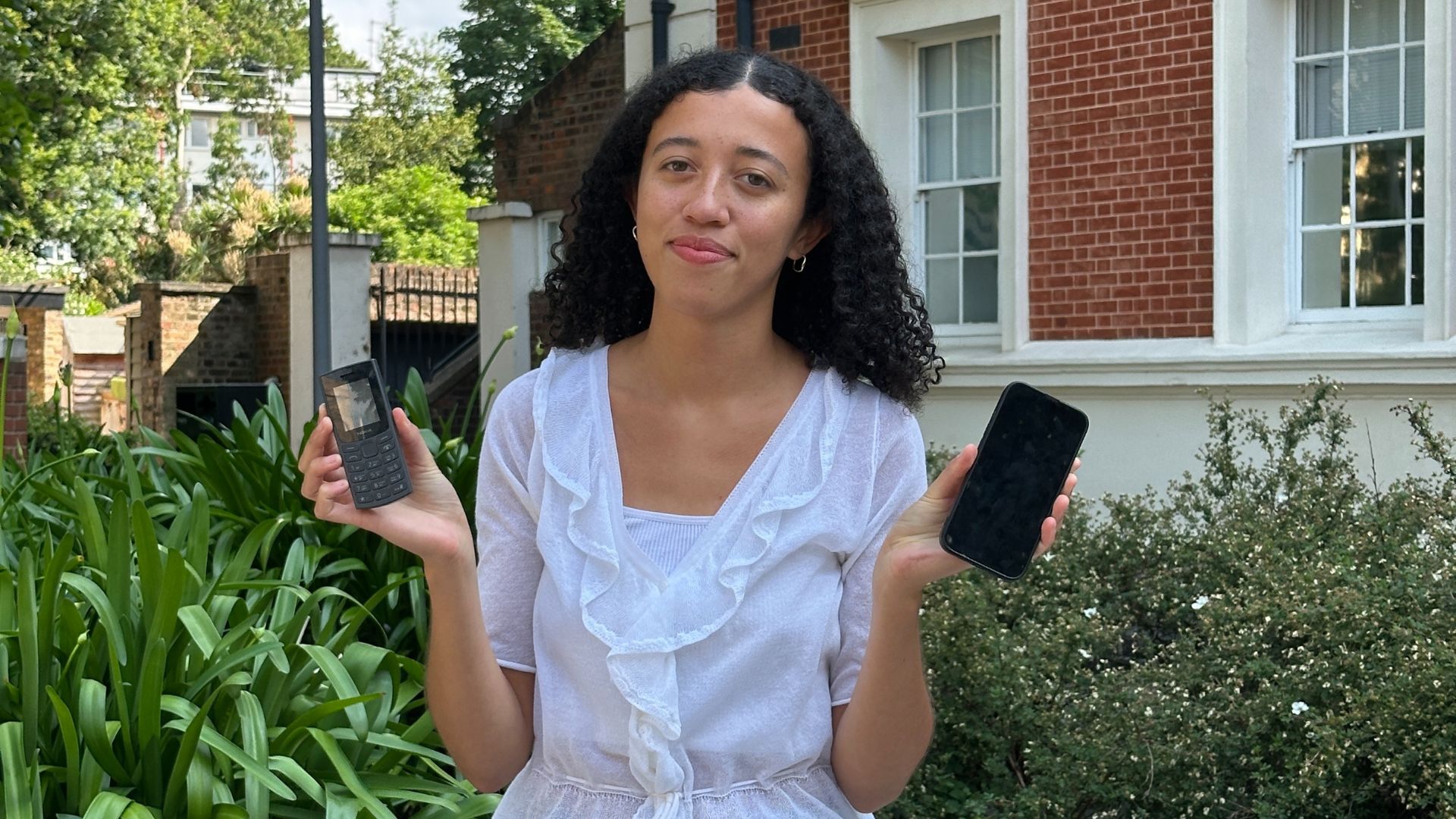
Is reverting to the brick phone the best hack for going smartphone sober? Sinéad Campbell puts it to the test to see if life without a smartphone is heaven or hell
Eddie Breckenridge was seeking an end to all the toxic relationships in his life following a tricky romantic breakup in 2022, so, as well as his partner, he decided to break up with his smartphone.
For six months, Eddie, 25, exclusively used a Blackberry. He removed his data plan so he could no longer access the internet, transforming it into a makeshift ‘dumb phone’.
“I was trying to bring my sensory levels down,” he says. “I started to feel like I wasn’t very present. I’d always had that curiosity of “am I addicted to my phone?”
According to research, this word, ‘addicted’ is not hyperbole. A recent medical study discovered that over 25 per cent of people worldwide have “smartphone addiction.”
Dr Zaheer Hussain, a Senior Lecturer in Psychology at Nottingham Trent University, whose research focuses on the effects of ‘problematic smartphone use’, says: “The different capabilities and apps such as social media, music, gaming and gambling contain powerful reinforcement schedules that have been proven to lead to addictive use.”
Without endless distractions and doom-scrolling, Eddie noticed a stark change in his life. “The day started to have clear start and end chapters,” he says. “It was quite good for me, I felt more myself.” To fill the iPhone-shaped hole in his life, Eddie returned to hobbies he had previously abandoned, such as playing the guitar. “I played a lot of musical instruments. The progress I made on them made me realise how much time we spend on our devices.”
The dumb phone or brick phone is a phone without access to social media, the internet, or even a camera, setting it far away from the technological advancements of modern mobile phones. Think of a Nokia ‘brick’ or a Samsung flip phone, with its tiny keys and pixelated square screen. But the rise of the dumb phone is not just a viral fad for early noughties nostalgia; for those using them, they offer a relief from the epidemic of smartphone-induced brain-rot.
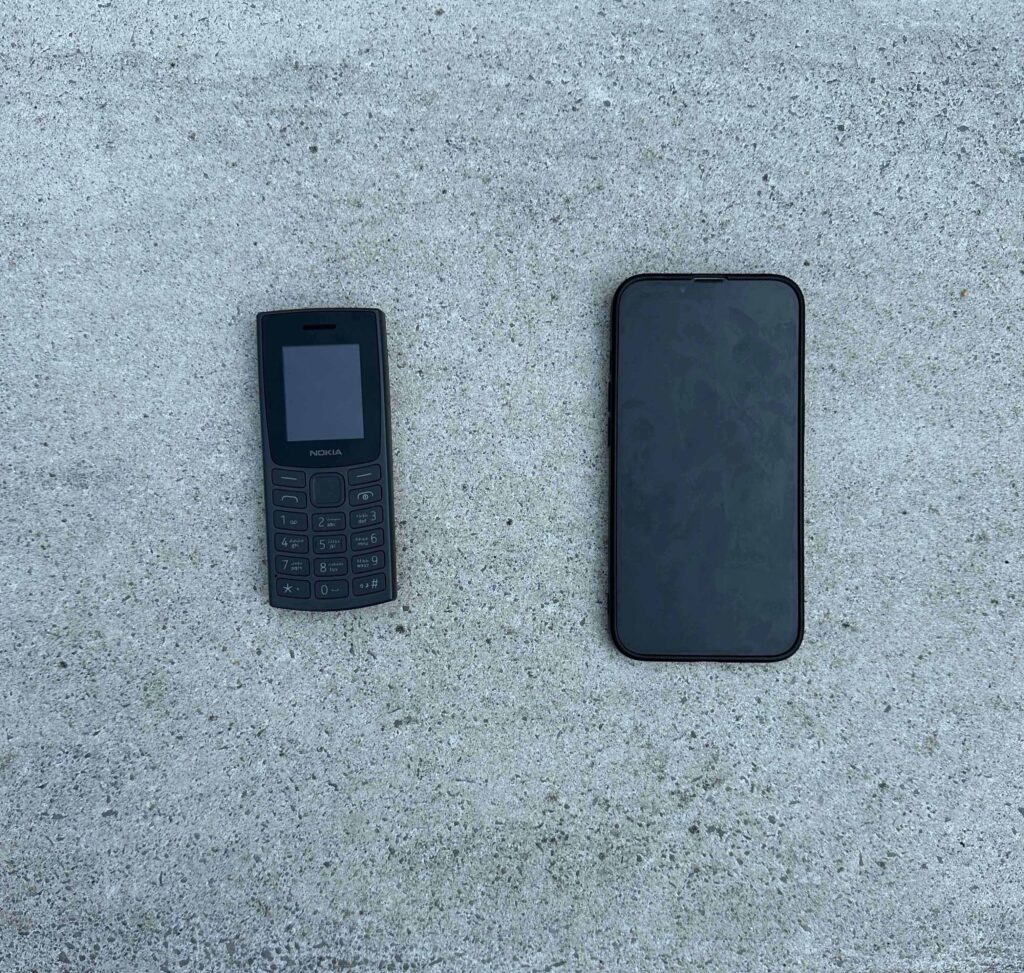
I’ve been an owner of an iPhone since I was 12-years-old and, in that time, have rarely been without it. To exist without a smartphone seems like a pledge to drop out of society altogether. But is it possible to go completely smartphone-sober and still survive in the modern world?
I decided to try it out for five days. I ordered a Nokia 105 from Amazon for £16.99 (plus a SIM adapter for £1.20), swapped my SIM card, switched off my iPhone and said goodbye to the daily conveniences I once mindlessly enjoyed.
The first thing I noticed was the lack of social media and initially it was liberating to simply let myself be bored. I was no longer carrying the daily news, celebrity gossip and what my friend from primary school ate for brunch with me at all times. But with the removal of endless scrolling came the loss of other conveniences such as Google Maps and Apple Wallet. Each day before I left the house I had to make sure I had my physical wallet as I could no longer rely on my phone to pay for things, and I would regularly find myself lost and be forced to ask strangers for directions, who were often baffled as to why I wasn’t looking it up on my phone.
By design, the dumbphone is excruciatingly tedious to use. The tiny Nokia keys were infuriating as I had to press each key two or three times to access some of the letters I needed to type out a word. I developed a newfound appreciation for abbreviated text speech and my friends quickly got used to my single letter ‘K’ replies.
Over my five-day stint of smartphone sobriety, I was confronted with the extent to which my entire life was reliant on a rectangular screen. Each day was a battle against FOMO, missing out on the latest events, I would’ve ordinarily discovered on Instagram.
Since having my iPhone firmly back in my hand, I realised I have no desire to continue my dumb phone experiment. For me, the benefits don’t compensate for the drawbacks. Or maybe I am simply irrevocably addicted to my phone.